Statistical Learning of Knowledge from Sequence Data
Nick Harley will present work being conducted in the Computational Creativity Lab at the University of Brussels, which explores the use of statistical models to build cognitive representations of sequence data. Sequence modelling is a central part of cognitive systems. The notion of sequence can be thought of as an abstraction of time series used to account for cognitive flexibility in the perception of time. The goal of their work is to bridge the gap between unsupervised learning and knowledge-based reasoning in cognitive systems.
Praktische info:
Inschrijven?
- Prijs: gratis
Krijg je graag een maandelijkse herinnering aan de seminaries in deze reeks over tijdsreeksen? Schrijf je in!
georganiseerd door:


Leertrajecten
In this seminar Nick Harley will describe the theoretical background of his team’s approach and two different application contexts. The formal basis is a predictive modelling framework called IDyOM (Pearce, 2005) which finds statistical patterns in multi-dimensional sequence data. Information theoretic measures are used to segment sequences into perceptual or cognitive units which then form the basis of a knowledge representation. One application of this method is in modelling music cognition, which involves the real-time organisation of low-level stimuli, such as notes, into high-level structures, such as chords and phrases. A second application is in reinforcement learning. Partial observability, dynamic environments, hidden rewards and explainability are problems for RL models. Supervised learning incorporating knowledge about sub-tasks can mitigate these problems. Harley will describe how statistical modelling of agent behaviour sequences can be used to learn sub-task knowledge in an unsupervised manner. He will finish with a discussion of the open challenges we are addressing and invite the audience to participate in a discussion.
Lesgever/spreker
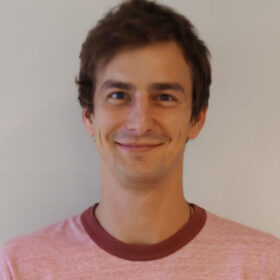
Nick Harley
Nick Harley graduated with an MEng in Electronic and Electrical Engineering from UCL (London) in 2011, and with an MSc in Sound and Music Computing from UPF (Barcelona) in 2014. He undertook a PhD in Computer Science at QMUL (London) and defended his thesis in 2019. His PhD dissertation is in the field of computational musicology and examines formal systems for knowledge representation and reasoning in the domain of music. He is currently a postdoc in the AI Lab at the VUB with research interests focused at the intersection of knowledge representation, statistical modelling and cognitive systems.
AI for Time Series Seminars
Verscheidene onderzoeksgroepen in het Vlaams AI-onderzoeksprogramma verrichten onderzoek van wereldklasse in verband met tijdreeksen, zowel voor de ontwikkeling van algoritmes en tools, als voor een brede reeks toepassingen. In een recente rondvraag bij de Vlaamse AI-gemeenschap, bleek dat het onderwerp ’tijdreeksen’ het meest gevraagd werd om toekomstige workshops en cursussen over te organiseren. Met deze seminariereeks komen we aan die vraag tegemoet en brengen we onderzoekers die geïnteresseerd zijn in, of onderzoek verrichten naar, tijdreeksen samen. We bieden hen en andere belangstellenden een gevarieerd programma met nationale en internationale sprekers.
Klik op de afzonderlijke webinars onderaan om de video-opnames te (her)bekijken.

Gerelateerde opleidingen

