Powering the future: AI innovations in the energy sector
From AI-driven efficiency breakthroughs in energy consumption and production to real-time smart grid optimization, the Flanders AI Research Program and VAIA present the latest research poised to transform operations in the energy domain. This highway event offers you the tools and knowledge to accelerate your own AI-powered energy solutions. Learn what’s coming at full speed in the world of renewable energy!
Practical information:
Want to register?
- Register until: 21 Nov 2024
- Price: free of charge
Georganiseerd door:


Programme
14.00-14.20 Welcome & introduction to North Sea Port & FAIR
14.20-15.00 Opening keynote: How can AI contribute to optimized energy production in an increasingly distributed network of renewable electricity production and storage units
- Jan Helsen (VUB)
15.00-15.20 Use cases of AI for smart grids and renewable energy
- Ann Nowé (VUB)
15.20-15.40 AI for Energy: Reinforcement learning for data-efficient and explainable control algorithms to exploit energy flexibility
- Chris Develder (UGent)
15.40-16.00 Coffee break
16.00-16.20 Optimizing Offshore Wind: Corrosion & Bearing Monitoring
- Pieter Bovijn (Flanders Make)
16.20-17.00 Adopting AI at RENEWI - AI use cases & lessons learned
- Daneel Geysen (RENEWI)
17.00-18.00 Networking reception
How AI can contribute to optimized energy production in an increasingly distributed network of renewable electricity production and storage units
By Jan Helsen (VUB – Accoustics & Vibrations Research Group)
The share of renewable energy production in the electricity mix is increasing fast. One of the thriving factors is the significant cost reduction of wind and solar generated electricity. However, these sources are intermittent in nature. Furthermore, the energy generation happens in a distributed way since wind farms and solar plants are spread around geographically. These two challenges require coordination between the renewable and conventional electricity production units to meet overall grid demand. Energy storage solutions such as batteries or hydrogen production units can support this by creating energy buffers. AI can play a substantial role in this complex ecosystem. This talk focusses on different aspects: advanced weather forecasts, asset health assessment, AI-supported control of production units (e.g., offshore wind farms) focusing on multi-objective optimization and finally optimized AI-supported collaboration between energy production and storage units to minimize grid impact as well as optimize storage unit capacity.
Use cases of AI for smart grids and renewable energy
By Ann Nowé (VUB AI Lab)
In this talk, several use cases of AI in the context of renewable energy will be presented. It will include examples of optimization of charging schedules of electrical vehicles, incentive mechanisms for energy communities, and how software agents can be trained to act on behalf of their users.
AI for Energy: Reinforcement learning for data-efficient and explainable control algorithms to exploit energy flexibility
By Chris Develder (UGent)
The AI for Energy (AI4E) team at IDLab, Ghent University, focuses on developing new data analytics and machine learning algorithms to support the energy transition. The latter faces challenges coping with on the one hand the still growing deployment of renewable sources in the electricity system, and on the other the increasing electrification (e.g., heat pumps, electric vehicles). Aside from diagnostic and predictive support tools for grid operators, the main focus of AI4E is on applications of reinforcement learning (RL) to develop innovative control algorithms for flexible assets such as heat pumps, batteries, and electric vehicle chargers. This talk will highlight some recent works of the team in the realm of (1) data-efficient learning of high-quality control policies, and (2) explainable AI. For (1), we will highlight the benefit of using physics-informed RL for the case of heat pump control. For (2), we explore the distillation of an interpretable decision tree controller derived from a black box RL policy, again for heat pump control. Another case study for (2) will illustrate a policy correction framework for battery control.
Optimizing Offshore Wind: Corrosion & Bearing Monitoring
By Pieter Bovijn (Flanders Make)
Reliability is crucial in offshore wind energy, where corrosion and bearing wear have a significant impact on turbine performance and maintenance costs. This talk explores advanced monitoring techniques for corrosion in offshore turbines and methods for predicting the remaining useful life (RUL) of bearings. Using AI-driven insights, these approaches aim to optimize maintenance schedules, extend turbine lifespan, ensure consistent energy output, and reduce operational costs.
Adopting AI at RENEWI - AI use cases & lessons learned
By Daneel Geysen (RENEWI)
This session will showcase applied AI use cases at RENEWI, such as detecting gas canisters and sorting waste, highlighting some real-world AI integrations. They will also share lessons learned from adopting AI, focusing on the challenges faced during integration. Additionally, the session will explore the role of onsite renewable energy, including wind and solar projects aimed at optimizing energy management and addressing their future energy challenges.
Teachers / speakers
Jan Helsen
Jan Helsen (VUB – Accoustics & Vibrations Research Group) has built an extensive amount of research experience within the field of wind farm modelling and power forecasting. He collaborated on a broad range of topics involving techniques like CFD, forecasting, anomaly detection and reinforcement learning. We can clearly state that he has a broad view on the AI & Energy field. Jan is active in the Flanders AI Research Program, where he leads the use case on Renewable energy production.
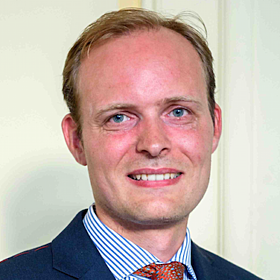
Ann Nowé
Professor Ann Nowé is a leading Belgian computer scientist specialised in artificial intelligence, with a focus on reinforcement learning, multi-agent systems, and explainable AI. She is a full professor at the Vrije Universiteit Brussel (VUB), holding joint appointments in the Faculty of Sciences and the Faculty of Engineering. Additionally, she is the head of the VUB Artificial Intelligence Lab, an EurAI fellow, and actively involved in Agent Community (IFAAMAS).

Chris Develder
Chris Develder is full professor with the research group IDLab in the Department of Information Technology (INTEC) at Ghent University and imec, Ghent, Belgium. He received the M.Sc. degree in computer science engineering and a Ph.D. in electrical engineering from Ghent University in July 1999 and December 2003 respectively (as a fellow of the Research Foundation, FWO). Chris currently leads two research teams within IDLab: (1) the AI for Energy (AI4E) team works on data analytics and machine learning for energy applications (including smart grids), (2) the Text-to-Knowledge (T2K) team on natural language processing (NLP), with a focus on information extraction and conversational agents.

Pieter Bovijn
Pieter Bovijn is a project lead at Flanders Make where he works on AI-driven industrial projects, such as anomaly detection in drivetrains and corrosion monitoring in offshore wind farms. With a background in data science and engineering, he previously managed Howest's Data Lab. His experience centers on the practical application of data and technology.

Highway: connecting industry with state of the art in AI research
The highway sessions of VAIA bring state of the art of research in artificial intelligence towards the Flemish industry. Joins us for these seminars and stay up to date with the research of today.

Related courses


SAIAR Summer Studio: From latent to physical space
Zomerschool - Kortrijk - Howest Hogeschool, SAIARlab