Introduction to AI and Machine Learning for Biomedical Research
Get familiarised with artificial intelligence (AI) models and state-of-the-art biomedical research based on machine learning! VAIA and its partners are hosting their successful introductory AI training course for biomedical research already for the fourth time.
Practical information:
Georganiseerd door:


Huge amounts of data are available today for biomedical research. These data arise in different forms like images, omics-data, electronic medical files, etc. Machine Learning algorithms can help researchers to find patterns, classify the data or help to make well-founded decisions, based on these data. Typical examples are the analysis of CT scans for cancer diagnoses or the identification of the proper treatment for MS patients.
Programme
Part 1: Self-paced online course KULeuvenX: ‘AI in Healthcare. Hype or Help’
- Chapters 1 and 2 are mandatory. Chapter 9 is recommended.
Part 2: Live online classes
- Module 1: Supervised Learning
Axel-Jan Rousseau (UHasselt, VAIA) & Christos Chatzichristos (KU Leuven, VAIA)
18 November, 13.00-15.00 - Module 2: Unsupervised Learning
Celine Vens (KU Leuven)
20 November, 13.00-15.00 - Module 3: Artificial Neural Networks and Deep Learning
Dirk Valkenborg (UHasselt)
25 November, 13.00-15.00 - Module 4: Reinforcement Learning
Pieter Libin (VUB AI Lab)
27 November, 13.00-15.00 - Module 5: Fairness and Privacy of AI
MaryBeth Defrance (UGent)
2 December, 13.00-15.00
Part 3: Presentation of use cases (online)
- Module 6: Use cases from the biomedical sector
5 December, 13.00-15.00
Learning objectives
The participant
- has an overview of the terminology and algorithms of AI that are applied in current research.
- is aware of the possibilities as well as the challenges concerning AI techniques (bias, fairness, data management, ethics, etc.).
- is able to discuss problems related to their research with an AI expert using appropriate terminology.
- is able to judge if AI techniques might be interesting to apply in their research.
- is familiar with some contemporary research topics in the biomedical field that use AI-related techniques.
Part 1: Self-paced online course
Online course: KULeuvenX: ‘AI in Healthcare. Hype or Help’
In this online course, developed by KU Leuven with the support of VAIA, you will discover how AI is revolutionizing healthcare. The added value of AI for healthcare is explained from the healthcare professional's perspective, while basic AI principles are clarified from the AI developer's point of view.
The online course can be freely accessed through edX platform, but you will be asked to create an account.
The following chapters are mandatory, you are expected to have completed these two chapters before the first online class of Part 2 (Module 1: Supervised Learning):
- Chapter 1: Breaking the (A)Ice (estimated time to complete: 1hr)
- Chapter 2: First AId Kit (estimated time to complete: 2hrs)
Not mandatory but recommended before attending Module 5 'Fairness and Privacy of AI':
- Chapter 9: How to coexist with AI (estimated time to complete: 2hrs)
Are you interested in learning more? Or do you you want a deep dive after the online classes? Feel free to complete the other chapters as well!
Part 2: Live online classes
Module 1: Supervised Learning
18 November, 13.00-15.00
Axel-Jan Rousseau (UHasselt, VAIA) & Christos Chatzichristos (KU Leuven, VAIA)
We'll focus into demystifying the core concepts of supervised learning. Discover how these learning paradigms underpin many AI-driven solutions in healthcare, enabling us to make predictions, classify patients, and uncover hidden patterns in medical data. In supervised learning, we make use of patterns and relations in labelled data to learn classification and regression models. We will delve into key concepts and discuss several algorithms such as SVM, KNN, and decision trees, as well as how we can measure and improve the performance of these algorithms.
Module 2: Unsupervised Learning
20 November, 13.00-15.00
Celine Vens (KU Leuven)
In unsupervised learning, we aim to analyse and learn from unlabeled datasets. The algorithms discover hidden patterns or data groups without the need for human supervision. In this module, we will discuss several tasks and techniques of unsupervised learning, including clustering, association rule mining, anomaly detection and recommender systems. We will also touch upon semi-supervised learning. For each task, we will discuss some examples from the biomedical domain.
Module 3: Artificial Neural Networks and Deep Learning
25 November, 13.00-15.00
Dirk Valkenborg (UHasselt)
Deep learning and neural networks have made a large impact on the biomedical research community. In this session, we will cover how the algorithms behind neural networks function, covering key architectures such as CNNs, RNNs, Transformers, and generative AI methods. We will demonstrate how these technologies are revolutionising biomedical applications, from medical imaging and drug discovery to protein folding.
Module 4: Reinforcement Learning
27 November, 13.00-15.00
Pieter Libin (VUB AI Lab)
Reinforcement learning concerns a distinct branch in the field of machine learning. While supervised and unsupervised machine learning techniques learn based on a set of instances, reinforcement learning concerns an agent that learns by interacting with an environment. To illustrate this setting, consider a video game, where the agent identifies as the player of the game. The environment concerns the video game that can be controlled with a gamepad and observed by looking at the screen. The agent receives feedback from the environment in terms of rewards, for example via a game score. Based on this feedback and the observations of the environment, a reinforcement learning agent aims at learning to play the game optimally, by interacting repeatedly with the environment. In this course, we will study both the reinforcement learning problem and the algorithms that can be used to approach such problems.
Over the last years, several important milestones were achieved using the reinforcement learning framework, such as learning to play ATARI 2600 video games, learning to play the board game Go to beat the number one human player and learning to reach grandmaster performance in the real-time strategy game StarCraft II. However, reinforcement learning is no longer limited to games, as many real-world problems can be formulated as a reinforcement learning problem. Recent studies used reinforcement learning to solve challenging problems such as wind farm control, epidemic mitigation, and robot control.
Module 5: Fairness and Privacy of AI
2 December, 13.00-15.00
MaryBeth Defrance (UGent)
Through machine learning, AI systems can learn and reproduce patterns of human intuition in datasets on a large scale. However, human behaviour in high-impact decision-making has always come with ethical codes and expectations, especially in biomedical sciences. Now that AI systems play an increasingly substantial role in such decisions, they should also aim to meet ethical standards. In this module, we particularly consider the ethical principles of fairness and privacy in AI systems, both highly active fields of research. Fairness aims to avoid statistical patterns of discrimination in decision-making, such as performing far worse for certain demographic groups. Privacy aims to avoid revealing sensitive information, such as people's medical records. We will discuss synergies between these two principles, but also their conflicts.
Part 3: Presentation of use cases (online)
Module 6: Use cases from the (bio)medical sector
5 December, 13.00-15.00
- Yvan Saeys (VIB-UGent) - Combining Human and Artificial intelligence with spatial omics for next-generation molecular pathology
- Alexander Koch (BioLizard) - Text mining for biomedical research
- Axel Faes (UHasselt) - Decoding sign language alphabet as coordinated finger actions from intracranial brain activity
- Thomas De Cooman (FibriCheck) - Detecting heart rhythm disorders from smartphone video data using the FibriCheck app and AI
- Wouter Bogaert (Orsi Academy) - AI Assisted Surgery
Lees meer

From enigma to insight: How explainable AI can help us unravel biological complexity
In this blog by BioLizard, we explore how explainable AI can shed a light on AI's decision-making process in computational biology.

Data Quality: the Key to Trustworthy AI in Care
For AI to truly support patients and healthcare professionals, the data needs to be right. But how do you ensure high data quality in a complex healthcare setting – and keep it that way? Jens Declerck from i-HD points the way.
Teachers / speakers
Dr. Axel-Jan Rousseau is an AI Expert for VAIA and a Postdoctoral Researcher at Hasselt University. Specializing in trustworthy computer vision, his work focuses on model calibration, ensuring AI systems provide reliable, statistically sound predictions.
He is also one of the coordinators for the Data Science track for FLAMES and develops AI-driven decision support systems for biomedical imaging and MS diagnosis. He holds a PhD in AI (2024) and Master's degrees in both AI and Industrial Engineering.

I am Christos Chatzichristos, currently a post-doctoral researcher at KU Leuven. My educational background revolves around electrical and computer engineering, with a specialization in Biomedical Applications and an emphasis on signal processing during both my Master's and Ph.D. studies. During my doctoral journey, I witnessed the profound impact of neural networks on the field of signal processing, marking the inception of my foray into the realm of AI applications. I hold a strong belief in fostering broad interdisciplinary collaborations, as I believe that research today cannot thrive in isolation within a single domain. Artificial intelligence stands as a potent tool to expedite healthcare research. However, to truly harness its potential, we must bridge the gap by facilitating healthcare professionals' understanding of fundamental AI concepts, just as they aid biomedical engineers in unraveling the mysteries of the human body. So, here's to using AI to accelerate healthcare research while ensuring that we all speak the same language – whether it's the language of algorithms or the language of anatomy!

Celine Vens is professor at KU Leuven campus Kulak and leading the machine learning and AI subgroup at itec. Her main research interest is the development of machine learning algorithms for applications in health and education. She focuses on non-standard supervised and semi-supervised learning tasks, such as multi-output prediction, time-to-event prediction and interaction prediction. Besides research, she is teaching several courses at the Faculty of Medicine.

Dr Dirk Valkenborg has an extensive academic and research background. He received his M.Sc. in Electrotechnical and Mathematical Engineering in 2004 from K.U.Leuven and his Ph.D. in Mathematics and Statistical Bioinformatics from the University of Hasselt in 2008, followed by an M.Sc. in Biostatistics in 2009. He worked as a postdoctoral researcher at K.U.Leuven and later joined VITO as a corporate scientist. He co-founded the Center for Proteomics at the University of Antwerp and focuses on statistical bioinformatics and data analysis in 'omics' research. Since 2015, he has been a professor at the University of Antwerp and is currently a professor in bioinformatics at Hasselt University, specializing in computational methodologies for 'omics' data analysis and data integrity.
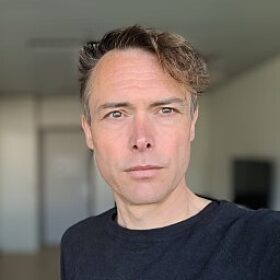
Pieter Libin
Prof. Pieter Libin graduated in 2014 at Vrije Universiteit Brussel in Informatics and obtained his PhD in Computer Science at VUB in 2020. After his PhD, he held a postdoctoral position funded by the Flemish science foundation at Hasselt university, at the department of data science. Since October 2021, Pieter is active as an assistant professor at the AI lab of the Vrije Universiteit Brussel. His research involves the use of machine learning to support decision makers by combining machine learning techniques with realistic simulation models and concerns theoretical and applicational AI with a focus on reinforcement learning and Bayesian modeling. He has a broad experience in modeling and analyzing real-world systems ranging from virus diversity, epidemic emergencies, and renewable energy providers. Pieter is a member of the Jonge Academie, an association of young top researchers and artists with an engagement to policy, society, research, and the arts. Pieter is a board member of the Benelux Association for Artificial Intelligence.

MaryBeth Defrance is a fourth year PhD student at Ghent University. Her research focusses on fairness in AI, with a special interest in how to quantify it. She is keen to tackle this technological challenge from a societal perspective. She has had papers published in the top conferences of Computer Science such NeurIPS, ICLR, and FAccT. Besides research she is also active as a teaching assistant in the first bachelor year of engineering and gives an annual guest lecture on AI fairness for the students of computer science engineering.
Expertise: Fairness in AI

Yvan Saeys obtained his PhD in computer science from Ghent University. After spending time abroad at the University of the Basque Country (Spain) and the University of Lyon (France) he returned to Belgium and established the Data Mining and Modeling for Biomedicine (DAMBI) group at the VIB Center for Inflammation Research (IRC) in Gent. As of 2015, he is a professor at Ghent University and a principal investigator (group leader) at VIB, where he is heading an interdisciplinary research team of 21 people, consisting of mathematicians, computer scientists, engineers and bioinformaticians. The Saeys lab studies the design and application of novel data mining and machine learning techniques for high-dimensional single-cell omics data, including methods to model cell developmental trajectories and intercellular communication. At the methodological level, the lab studies the robustness and interpretability of machine learning models.

I'm Alexander and I'm a data science team lead at BioLizard. Our goal is to transform the biomedical data of our clients into actionable insights. Using data mining, data visualisation, bioinformatics pipeline development, software development, and the construction of ML and AI models, we support biotech and pharmaceutical companies and research institutes in their (pre)clinical research and development efforts.

Axel Faes is a postdoctoral researcher in Biomedical Data Sciences at Hasselt University, where he is technical machine learning lead and scientific coordinator of the Flanders AI Research Program’s Real World Evidence use case. He holds M.Sc. degrees in Computer Science Engineering and Artificial Intelligence from KU Leuven, where he also completed a PhD in Biomedical Sciences on finger movement decoding using tensor regression modeling. His work bridges computational neuroscience, brain-computer interfaces, and federated learning for multi-modal biomedical and health data, contributing to the development of innovative AI methods that advance biomedical research and clinical practice as part of #LeadingAIinHealth.
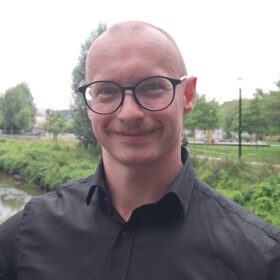
Dr. ir. Thomas De Cooman obtained his Master of Science in Computer Science from Ghent University and later earned his PhD in Engineering Science from KU Leuven, with a dissertation on Epileptic Seizure Detection in a Home Environment. His doctoral research focused on detecting epileptic seizures through heart rate analysis using signal processing and machine learning techniques. Following his PhD, he continued as a Postdoctoral Researcher at KU Leuven and later joined Cerence as a Research Scientist. Since 2022, he has been working as a Data Scientist at FibriCheck, where he is responsible for developing medical-grade deep learning applications for photoplethysmography (PPG) data.

Wouter Bogaert works as a civil engineer at Orsi Academy in Melle, one of the largest robotic surgery training centers in Europe and a center of expertise for all aspects of medical technology. He is also a doctoral researcher in computer science at ID-lab (Ghent University, IMEC), where his focus is primarily on natural language processing, computer-aided surgery, and multimodal systems.