Fairness and bias in NLP
Are you a researcher in the humanities or social sciences, working with text data? Are you currently (looking into) using Natural Language Processing tools such as large language models? Then you may know that while AI tools are sometimes seen as “non-human thus objective”, this is a misconception. Just like humans, NLP tools can exhibit biases and unfair behavior or decision-making. This workshop makes you aware of the presence or lack of fairness and bias in NLP, on a theoretical level and also in a hands-on way. After this course, you can tackle your own data with AI in a more responsible way!
Practical information:
Want to register?
- Prerequisites: having followed the course "Workshop Text Analysis using NLP for Researchers", or having a basic notion of NLP
- Price: free
Make sure to bring a fully charged laptop with Python installed on it (version 3.9 or higher). Access to Google Colab (free or paying) is required, too.
Included in the workshop are: course material, coffee breaks.
Limited places available!
Georganiseerd door:


Program
- Coffee and registration | 09.30 - 10.00
- Morning session | 10.00 - 12.00
- Introduction to large language models (LLMs)
- Background on fair machine learning (investigating cases such as COMPAS, Amazon, the ’toeslagenaffaire’)
- Intrinsic bias in language models: bias, hallucinations, toxicity, mitigation measures (e.g. RAG)
- Practical session on exploring biases in LLMs
- Lunch break | 12.00 - 13.00 (lunch not included)
- Afternoon session | 13.00 - 16.00
- Finetuning language models: different tasks, usage…
- Extrinsic biases of language models: metrics, mitigating extrinsic biases, implications
- Practical session on monitoring Twitter sentiment
- Legal issues: data usage, GDPR, AI act, institutional policies when performing research with LLMs
About the speakers and organizers
This course is organized by VAIA and the Antwerp Doctoral School of the University of Antwerp.
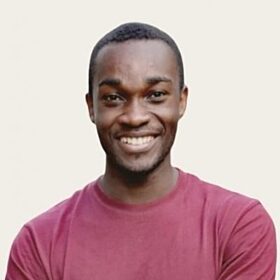
The workshop is taught by dr. Pieter Delobelle (KU Leuven) and Ewoenam Kwaku Tokpo (UAntwerp), who are experts in computer science, AI, and fairness and bias in language models.
Teachers / speakers
Pieter Delobelle is currently an AI engineer at Aleph Alpha focussing on inference, alignment and fairness of large language models. Previously, he was a postdoctoral researcher at KU Leuven with a specialization in bias and fairness in large language models and he also developed the state-of-the-art Dutch language model RobBERT. He obtained a Masters in Engineering Technology from KU Leuven in 2018 at the Ghent Technology Campus, Belgium. Subsequently, he obtained an Advanced Masters in Artificial Intelligence from KU Leuven, and he stayed on for a Ph.D. in Computer Science under Professor Bettina Berendt and Professor Luc De Raedt, which he started in 2019 and defended in 2023, titled 'Towards fairer foundation models'. His current research on bias and fairness in large language models led to research visits at Weizenbaum Institute and Bocconi University, as well as an internship at Apple Inc.

Ewoenam Kwaku Tokpo received a Master of Science in Computer Science from the University of Trento in 2019. He is currently a PhD student at the ADREM Research Lab in the Computer Science Department of the University of Antwerp. His research is focused on Fairness in Natural Language Models, where he explores issues of bias in natural language models and how these biases can be mitigated.