Rethinking Master's Theses in an Era of GenAI
Generative AI is influencing how master's theses and master's practical theses are developed, supervised, and assessed. This session explores two process-oriented responses to this evolution: a research portfolio (with a view of steps, iterations, choices, and data processing) and a redesigned master's practical theses within EDUMA, in which AI is used purposefully as a supporting tool. Get inspired in this webinar by Marijke Van Vlasselaer (VUB) and Evelien Opdecam (UGent), who will share their experiences with rethinking master's theses.
Learn from colleagues how they use AI tools to support and adapt their daily work, teaching, and research.
Practical information:
Want to register?
- Price: €0
Part of Peers & Prompts, online AI inspiration sessions for higher education, an initiative of the VLIR working group "Generative AI in university education," in collaboration with VAIA.
Georganiseerd door:


Leertraject
The Master's Thesis in the Age of GenAI
The rise of generative AI further reinforces the limitations of the traditional master's thesis, which primarily focuses on the final product. As a result, the research process often remains insufficiently visible, hampering both the supervision and evaluation of master's theses. A key response to this is a shift to a process-oriented approach to the master's thesis through a research portfolio.
Within this portfolio, the emphasis is on research steps, iterations in the writing process, content choices, and data processing. Students document their approach and take explicit ownership of their research process. This shifts the focus from mere text production to developing and demonstrating research competencies and academic integrity. Combined with a systematic screening of master's theses for inappropriate AI use, this approach contributes to students regaining explicit ownership of their research.
In Dutch!
EDUMA as a pioneer of the master's thesis in an AI era
Evelien Opdecam, Ghent University
Research is often dismissed as superfluous in teacher education: various stakeholders consider it irrelevant. International studies, however, clearly demonstrate that an investigative attitude is at the heart of professional development and effective teaching for teachers. It enables teachers to make informed choices, adapt flexibly to change, and act purposefully in a complex and rapidly evolving school context. The master's thesis in university teacher education remains crucial, but it now faces new challenges due to expectations, feasibility, and the rise of AI.
Within EDUMA, this context led to a conscious rethinking of the master's thesis. This presentation explains how EDUMA is pioneering a renewed concept that integrates AI as a supporting tool. The current procedure and accompanying documents will be explained, with continued attention to quality and academic integrity. Initial experiences demonstrate that this approach is feasible and offers prospects for future-oriented practical research within teacher education.
In Dutch!
Moderator
Saskia Goeteyn, VAIA
Facilitates the session and facilitates discussion between speakers and the audience. Saskia will ensure the session runs smoothly.
Teachers / speakers
Marijke Van Vlasselaer
As an educational expert specializing in generative AI at the Faculty of Social Sciences and Solvay Business School, I focus on reimagining written evaluation methods—including master's theses—to align with the evolving landscape of (G)AI technologies. My work centers on promoting academic integrity in the context of generative AI, ensuring that educational institutions can adapt to and harness these tools responsibly.
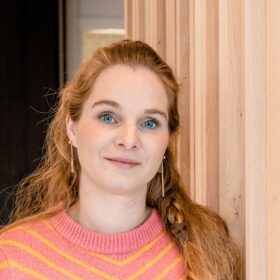
Evelien Opdecam
Evelien Opdecam is hoofddocent aan de Universiteit Gent, verbonden aan de Vakgroep Accountancy, Bedrijfsfinanciering en Fiscaliteit. Ze behaalde haar doctoraat in de Toegepaste Economische Wetenschappen in 2014 en doet onderzoek binnen Accounting Education. Voorafgaand aan haar academische loopbaan werkte zij als auditor voor het Vlaams Ministerie van Onderwijs en Vorming bij het Rekenhof. Momenteel is zij coördinator van de lerarenopleiding aan de Faculteit Economie en Bedrijfskunde.


Peers & Prompts: AI Inspiration for Higher Education
The most surprising discoveries often happen close to home. This also applies to generative AI! Are you curious about how your colleagues are using AI tools to innovate education and research? Want to learn how to integrate (gen)AI into your daily work? Then join our monthly online sessions and discover inspiring practices from Flemish university education.
Learn from colleagues how they use AI tools to support and adapt their daily work, education, and research.

Related courses

Fundamental concepts of multi-omics data integration
Opleiding - Leuven - Genomics Core Leuven
