Practical AI for time series, small data and engineering design
How do you build reliable AI solutions when data is scarce, systems are complex, and decisions must be explainable? In this Highway session, FAIR, VAIA, and delaware bring together leading researchers and industry experts to explore how advanced AI techniques for time series analysis, small-data machine learning, and engineering design can be translated into practical, deployable solutions for industry.
Praktische info:
Inschrijven?
- Inschrijvingen: tot 18 mei 2026
- Prijs: gratis
georganiseerd door:


Leertraject
(Re)watch the presentations
Program
13:00 - Welcome & registration
13:30 - Opening words
Sabine Demey (Flanders AI Research Program) & Femke De Backere (VAIA - Flanders AI Academy)
14:00 - Methods for time series analysis
Hendrik Blockeel (KU Leuven)
14:30 - ML4ENG - Data-efficient and smart design
Ivo Couckuyt (UGent)
15:15 - From Data to Decisions: AI Enhanced Engineering Design Support
Jeroen Jordens (Flanders Make)
15:45 - When zero-shot beats best-in-class: a deep dive into time series foundation models
Mihail Mihaylov (Sirris)
16:15 - Enabling Conversations with Data: From Engineering to Real‑World Use
Wouter Labeeuw & Rémi Tossut (delaware)
16:45 Q&A with all speakers
17:15 Network Reception

What can you expect of this study day?
This afternoon session focuses on disseminating FAIR research towards industry, with a strong emphasis on what actually works in engineering and manufacturing contexts. You will gain insight into:
- state-of-the-art methods for pattern and anomaly detection in time series,
- data‑efficient machine learning for high‑quality but limited datasets,
- AI‑supported engineering design through explainable and knowledge‑driven systems,
- and a critical assessment of time series foundation models in real‑world settings.
Expect concrete methods and industrial use cases, followed by ample opportunity to connect with peers during the networking reception.
Methods for time series analysis
By Hendrik Blockeel - KU Leuven
Time series analysis is a broad area that comprises many different types of tasks and methods. In this talk, I will present a number of methods that have been developed by DTAI for the task of discovering repeated patterns (“motifs”) as well as abnormal patterns (“anomalies”) in time series. I will discuss LoCoMotif, which finds subsequences that approximately repeat themselves in one or more time series; LoCoMotif-DoK, which allows the user to inform the system what kind of motifs would be interesting; SubTSMD, which enables to efficiently find these motifs in a subset of high-dimensional data; Dynamic Subsequence Warping, a method for comparing two time series that maps similar subsequences to each other; and Sleeve, a method that quantifies and visualizes variance within clusters of similar sequences.
The focus will be on what these methods do and for what type of applications they can be useful, not on how they work. Implementations are freely available for download, some as part of the popular DTAI-Distance or DTAI-Anomaly toolboxes.
ML4ENG - Data efficient and smart design
By Ivo Couckuyt - UGent
In industries like engineering, manufacturing, and healthcare, access to large, labeled datasets is often limited - making it challenging to apply traditional Machine Learning (ML) methods. However, the data that is available tends to be of high quality, e.g., coming from time-consuming physics-based simulations or costly lab-controlled experiments. Data scarcity has emerged as a major challenge in recent years, and going from the traditional "big data" to “small data” requires a shift in approach.
In this talk, we introduce data-efficient ML (or surrogate modeling), which enables practitioners to build and deploy effective models trained on just 10 to 100 examples. Data-efficient ML can accelerate tasks such as design space exploration, optimization, sensitivity analysis, generative design, and the development of cost-effective digital twins. We explore several real-world examples from industry, from creating trustworthy digital twins, to the design of ventilation systems and optimizing the manufacturing process.
AI‑Enhanced Engineering Design Support
By Jeroen Jordens - Flanders Make
As industrial systems grow in complexity, engineers are increasingly challenged to make fast, well‑founded design decisions based on specialised knowledge, scattered data, and evolving requirements. At the same time, advances in symbolic AI, knowledge graphs, and machine reasoning are opening new opportunities to embed domain expertise directly into digital tools.
In this presentation, we introduce the concept of Interactive AI Consultants: intelligent, explainable decision-support systems that formalise expert knowledge and reason upon it to guide engineers during the early phases of product and process design. These agents go beyond traditional analytics by integrating structured domain knowledge, constraints, and logic-based reasoning, enabling trustworthy, transparent recommendations in contexts where reliability and explainability are essential.
Building on a real industrial use case, we demonstrate how such a consultant can assist engineers in navigating complex design trade-offs, drastically reducing the time and expertise needed to evaluate alternatives.
Attendees will gain insight into the underlying technological building blocks, the practical steps for capturing and formalising expert knowledge, and the broader potential of these AI-driven reasoning systems to support smarter, more adaptive, and future-ready engineering workflows.
When zero-shot beats best-in-class: a deep dive into time series foundation models
By Mihail Mihaylov - Sirris
Time series foundation models promise accurate forecasts without training, tuning, or feature engineering. But how do they hold up when benchmarked against both state-of-the-art results from the scientific literature and real forecasters operating in production?
In this session, we share concrete experimental results from months of rigorous testing. We compared open-source foundation models, running fully out of the box, against peer-reviewed traditional ML benchmarks, as well as established forecasting systems from industry. We cover the methodology, the datasets, the results, and where the models fall short. The results challenge common assumptions about what it takes to build a competent forecaster in the era of generative AI.
If you work with time series data and wonder whether foundation models are ready for real-world use, this talk gives you a data-driven answer.
Enabling Conversations with Data: From Engineering to Real‑World Use
By Wouter Labeeuw & Rémi Tossut - delaware
73% of the organisations struggle to prepare their data for AI, while expectations for conversational data access continue to rise. Data consumption is moving beyond traditional reports and queries towards more conversational ways of working with information. This shift only works when data is well structured, properly governed, and ready to be consumed by AI.
As a consulting firm, we connect data engineering and data consumption. We show what can be enabled with out‑of‑the‑box tooling and when additional components, such as an MCP server, are required to expose data through interfaces like Claude or similar tools. We also examine how modern coding tools and agentic approaches support data ingestion, transformation, and preparation, keeping these use cases reliable and scalable.
Lesgevers / sprekers
Hendrik Blockeel
Hendrik Blockeel is a full professor at the Computer Science department of KU Leuven, Belgium, head of the DTAI section (Declarative Languages and Artificial Intelligence), and a member of the KU Leuven Institute for Artificial Intelligence (Leuven.AI). He is also a Fellow of the European Association for Artificial Intelligence and a former Editor-in-Chief of the journal Machine Learning. Prof. Blockeel’s research background is mostly in machine learning, with connections to data science and artificial intelligence in the broader sense. His recent research focuses on time series analysis and on providing guarantees on the behavior of learned models (verification, certification).

Ivo Couckuyt
Prof. dr. ir. Ivo Couckuyt leads the data-efficient Machine Learning (DE-ML) research effort of the Surrogate Modelling (SUMO) cluster in IDLab at Ghent University. At the same time, he is affiliated with imec, a world-leading R&D and innovation hub in nanoelectronics and digital technologies. Ivo Couckuyt contributes more than 10 years of experience in surrogate modeling, data-efficient machine learning (DE-ML), active learning, digital twins, and design space exploration and optimization techniques. During his career, he published more than 100 peer-reviewed papers and abstracts in international conference proceedings, journals, and books. He supervised more than 15 Ph.D. students, holder of multiple patents, and has won several paper awards. His interests include surrogate modeling, surrogate-based optimization, and physics-informed Artificial Intelligence for complex engineering problems, including techniques such as Bayesian optimization and Gaussian processes. Surrogate models, or digital twins, are fast-running approximations that mimic the complex behavior of a system, and they can be used for various engineering tasks, including design, modeling, optimization, uncertainty quantification, and control.

Jeroen Jordens
Jeroen Jordens is working as a Senior Research Engineer in the Circular Joining technology domain at Flanders Make. As a doctor in Chemical Engineering and European Adhesive Specialist, he has strong expertise in adhesive bonding processes. At Flanders Make, he is combining this knowledge with digitalization technologies such as digital twins or Artificial Intelligence, to support the selection of proper adhesives and optimization of adhesive bonding processes.

Mihail Mihaylov
Mihail Mihaylov is a GenAI expert at Sirris with 18 years of experience in artificial intelligence, combining a decade of work in start-ups and scale-ups with eight years of applied (gen)AI and machine-learning research. He has led the development of AI-powered SaaS products in the energy sector and introduced new concepts and algorithms in decentralized agent-based systems. His work bridges deep technical insight with practical industrial applications, helping organisations adopt cutting-edge AI technologies with confidence.
At Sirris, he is part of the GenAI team, where he supports companies in securing funding for innovation projects focused on generative AI. In parallel, he works as an independent entrepreneur, turning ideas into market-ready products. He also act as an external evaluator for European Commission programme calls.
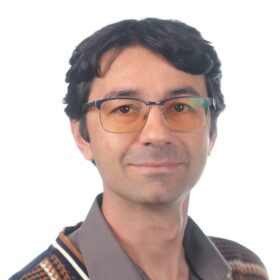
Wouter Labeeuw
Wouter Labeeuw is a Senior Manager for Data & AI at delaware, where he has worked since 2016. He holds a PhD in Engineering Science from KU Leuven and has led large‑scale data platform initiatives across manufacturing, life sciences and the public sector. His work focuses on designing robust, well‑governed data platforms that enable AI at scale. Alongside this, Wouter is closely involved in the practical adoption of agentic AI.

Rémi Tossut
Rémi Tossut is a Data Engineer at delaware Consulting, specializing in data engineering and business intelligence. Interested in both the technical & functional aspects of data solutions, he bridges the technical and analytical worlds to help organizations shorten the path from raw data to business decisions. Rémi is actively exploring how AI-powered agents and automation can reshape the way businesses interact with their data.

Sabine Demey
Sabine Demey is the director of the Flanders AI Research Program. She brings together researchers from 11 research partners in Flanders (universities and research centres). Together they tackle challenging AI Research Challenges and apply the new AI methods in healthcare, in industry 5.0, for the energy transition, in society. She believes it is important for technological developments such as AI to have a meaningful impact on people, industry and society. Sabine is a computer scientist with a PhD in robotics. Prior to leading the AI Research Program in Flanders since 2020, she has 20+ years industrial experience in research, product and business development, software for the manufacturing industry and for healthcare.

Femke De Backere
Femke werkt deeltijds bij VAIA (Vlaamse AI Academie) als project leader. Daarnaast is ze ook aangesteld als hoofddocent aan de Universiteit Gent in het vakgebied Software Engineering. De focus van haar onderzoek ligt op het adaptief maken van softwaresystemen op een intelligente manier. Beseffen dat software-oplossingen niet altijd voor iedereen werken en dat er geen eenduidige aanpak bestaat staat hierbij centraal. Qua toepassingen focust zij vooral op het brede domein van de gezondheidszorg. Denk daarbij maar aan het personaliseren van het stimuleren van fysieke activiteit. Vandaar ook de sterke link tussen haar onderzoek en haar opdrachten binnen VAIA. De leertrajecten voor AI in de gezondheidszorg sluiten nauw aan bij haar interesses en expertise.

Highway: connecting industry with state of the art in AI research
In de highway-sessies van VAIA en het Vlaamse AI-Onderzoeksprogramma brengen we de state of the art uit het Vlaamse onderzoek naar de Vlaamse bedrijven en industrie. Neem deel en blijf op de hoogte van hedendaags AI-onderzoek!

Gerelateerde opleidingen
