Robots on the Factory Floor: What works today, what comes next?
What can robots really do on a factory floor where products vary, layouts shift and people share the aisles? FAIR, VAIA and Volvo Car Gent bring together researchers from Flemish universities and research centres with industry experts for an afternoon on robotics and Physical AI in industrial and service environments. Participants will discover where robots and autonomous systems stand today, how new technologies such as Vision Language Action models are reshaping the field, and which challenges still stand in the way of broad adoption. Join us at Volvo Car Gent for a clear and realistic view of what robotics can bring to your organisation, and what it takes to get there.
Praktische info:
Leertraject
georganiseerd door:


Program
13:00 - Welcome & registration
13:30 - Opening words
Sabine Demey (Flanders AI Research Program), Femke De Backere (VAIA - Flanders AI Academy) & Volvo Car Gent
14:00 - How much variety can a robot handle? A practical map for the factory floor
Francis wyffels (UGent)
14:30 - No Cages, No Compromise: Bringing Mobile Robots and Humanoids Safely into Existing Workplaces
Bram Vanderborght & Yuri Durodie (VUB)
15:15 - Teaching robots by example
Sam Dehaeck (Flanders Make)
15:45 - Flexible Robots for a Factory That Keeps Changing
Pieter Simoens (UGent)
16:15 - From Perception to Physical AI: Bringing Intelligent Robots to the Factory Floor
Nick Kuijpers (Volvo Car Gent)
16:45 Q&A with all speakers
17:15 Network Reception
What can you expect of this study day?
This afternoon session is aimed at manufacturing companies, technology adopters, innovation managers and business decision makers who want to look beyond the hype. Leading researchers and industry innovators share their insights, backed by live demos. The program covers:
- Practical frameworks to judge how much variety a robot task really demands, and which technologies can handle it
- Safe integration of mobile robots and humanoids into existing workplaces, with the new EU Machinery Regulation in view
- Learning from demonstration, where robots train on footage of people doing the job instead of being programmed by experts
- Flexible robots driven by Vision Language Action models, and what they can and cannot do on a changing shop floor
Volvo Car Gent shares how it is exploring Physical AI in its own plant, and a Q&A with all speakers closes the program. Expect current research and an honest look at risks and limitations, with plenty of time to exchange ideas during the networking reception and demo visits.
How much variety can a robot handle? A practical map for the factory floor
By Francis wyffels - UGent
Robots in factories thrive where nothing changes: the same part, the same spot, the same motion. The moment products vary, parts arrive mixed, or the robot has to move between stations, automation stalls, and every supplier promises that its newest technology closes the gap. In this talk, we give you a framework to think about those promises: a simple way to size up how much variety a robot job really asks for, and to place any new technology against it, from vision-language-action models and agentic robots that plan their own work to humanoids and mobile manipulators. We illustrate it with robots from our own lab that learn from a demonstration, see what cameras miss and feel what they grasp, and with the questions we ask an industrial partner before a project starts. We close with FIDEX, our imec PROSPECT project on robot fingertips, and how companies take part.
No Cages, No Compromise: Bringing Mobile Robots and Humanoids Safely into Existing Workplaces
By Bram Vanderborght - VUB
Most factories and warehouses were never designed for robots. Legacy equipment, fixed layouts and established human workflows cannot simply be redesigned, so robots must adapt to the environment rather than the other way around. At the same time, companies need productivity, workers need to feel safe, and regulators demand certified safety. The new EU Machinery Regulation, applicable from 2027, raises the bar further.
This talk presents ORBIT, an imec research initiative that tackles this gap together with the full Flemish value chain, from technology providers to end users such as Volvo and Kautex. It covers four capabilities that decide whether robots succeed on the shop floor: 360° situational awareness, robust localisation where cameras and SLAM fail, shared perception between robots, and perceived safety for workers. Along the way, it looks at the practical questions: what works today, what the risks are, and how companies can prepare for deployment.
Teaching robots by example
By Sam Dehaeck - Flanders Make
Wouldn’t it be great if you could just demonstrate what the robot should do and it would just follow your example? No need to hire an expert to program the robot. You just film humans performing the job and the robot can use this footage to train itself to do the job. In this presentation, we will describe how this technology works, what it can achieve and its current limitations.
Flexible Robots for a Factory That Keeps Changing
By Pieter Simoens (UGent)
Industrial robots work well in a static setting: the same product, the same cell, the same shop floor layout. Factories are moving away from that. Changeovers come faster, people and vehicles share the aisles, and the layout changes over a weekend.
Vision-Language-Action models let a robot be instructed in plain language, not reprogrammed, and are piloted today. In this talk, I will discuss three open questions. A robot must react to the unexpected, yet a VLA issues a batch of movements and runs blind for up to a second. Do we really need a high-end GPU in every robot to shorten it? It must find its way in a building whose layout keeps changing. How much navigation autonomy can we give it? And it must cooperate with machines it never met. Can zero-shot coordination spare us another integration project?
I will show what these models can and cannot do, and which routes look most credible.
From Perception to Physical AI: Bringing Intelligent Robots to the Factory Floor
By Nick Kuijpers (Volvo Car Gent)
At Volvo Car Gent, we are exploring how Physical AI technologies can bring greater flexibility to manufacturing. We will share our current initiatives, why Physical AI matters for industry, and which challenges still need to be addressed to enable large-scale deployment.
Lesgevers / sprekers
Sabine Demey is the director of the Flanders AI Research Program. She brings together researchers from 11 research partners in Flanders (universities and research centres). Together they tackle challenging AI Research Challenges and apply the new AI methods in healthcare, in industry 5.0, for the energy transition, in society. She believes it is important for technological developments such as AI to have a meaningful impact on people, industry and society. Sabine is a computer scientist with a PhD in robotics. Prior to leading the AI Research Program in Flanders since 2020, she has 20+ years industrial experience in research, product and business development, software for the manufacturing industry and for healthcare.

Femke werkt deeltijds bij VAIA (Vlaamse AI Academie) als project leader. Daarnaast is ze ook aangesteld als hoofddocent aan de Universiteit Gent in het vakgebied Software Engineering. De focus van haar onderzoek ligt op het adaptief maken van softwaresystemen op een intelligente manier. Beseffen dat software-oplossingen niet altijd voor iedereen werken en dat er geen eenduidige aanpak bestaat staat hierbij centraal. Qua toepassingen focust zij vooral op het brede domein van de gezondheidszorg. Denk daarbij maar aan het personaliseren van het stimuleren van fysieke activiteit. Vandaar ook de sterke link tussen haar onderzoek en haar opdrachten binnen VAIA. De leertrajecten voor AI in de gezondheidszorg sluiten nauw aan bij haar interesses en expertise.


Prof. dr. ir. Bram Vanderborght was born in Belgium in 1980. He received the degree in the study of Mechanical Engineering at the Vrije Universiteit Brussel in 2003 with highest distinction. Since 2003 he was researcher at the VUB, supported by the Fund for Scientific Research Flanders (FWO). In May 2007 he received his PhD in Applied Sciences. The focus of his research was the use of adaptable compliance of pneumatic artificial muscles in the dynamically balanced biped Lucy. In May-June 2006 he performed research on the humanoids robot HRP-2 at the Joint Japanese/French Robotics Laboratory (JRL) in AIST, Tsukuba (Japan) in the research "Dynamically stepping over large obstacles by the humanoid robot HRP-2". He received a 3-year post-doc grant with mobility grant from the FWO. From October 2007-April 2010 he worked as post-doc researcher at the Italian Institute of Technology in Genova (Italy) on the humanoid robot iCub and compliant actuation.
Since October 2009, he is appointed as professor at the VUB where he teaches mechatronics and gives a robotics project. From October 2011-Sept 2016, he was research director at the Universitatea Babes-Bolyai, Department of Clinical Psychology and Psychotherapy with a project on robot assisted therapy with ASD children and VUB-PI of the DREAM project. He received an ERC Starting Grant on Series-Parallel Elastic Actuation for Robotics (SPEAR). He was a member of the Young Academy of the Flemish Academy of Belgium for Science and the Arts.
Currently he coordinates EU FET SHERO SHERO project and Marie Curie ITN SMART project. He is VUB-PI of EU project SOPHIA. He was till 2020 the core lab manager of Flanders Make in Flexible Assembly, now he is affiliated to the Interuniversity Microelectronics Institute (imec), Belgium, as scientific collaborator. He is also member of Brubotics, the mulitdisciplinary research enter on Human robot interaction. He also co-leads the Homo Roboticusproject on how to keep the human values central in a robotised world. He was till 2020 the Editor In Chief of IEEE Robotics and Automation Magazine, from 2022 he will be Vice President - Electronic Products and Services Board of IEEE-RAS.
His research interests include the use of soft and self healing actuators for cognitive and physical human robot interaction in applications in health and manufacturing. His works is on display in the AI Experience Center.

Sam Dehaeck started his research career in 2003 with the development of optical measurement techniques to investigate bubbles in his PhD. This was followed by novel research into interferometric measurement techniques to measure evaporation at ULB (Belgium). ESA was interested in the developed technology and selected these experiments for testing on the international space station. Since 2020, Sam made the switch to Flanders Make, pursuing his research interests in advanced image analysis techniques and the opportunity deep learning was offering in the field. Since 2026, he is leading the vision for robotics and automation team at Flanders Make. His active research interests are in novel approaches to robotic manipulation problems, especially focusing on vision-related challenges.
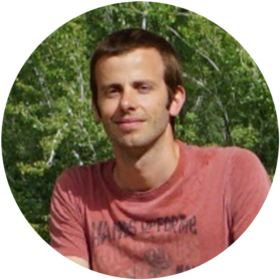
Pieter Simoens is associate professor at Ghent University and imec. He is the head of the DECIDE research group, focusing on advanced sensing, planning and control algorithms for autonomous systems. Pieter Simoens obtained his Ph.D. degree in Computer Science from Ghent University in 2011. He is also affiliated with the imec research institute. Pieter Simoens is responsible for various courses on software engineering, mobile application development, system design and applied machine learning. His research interests include artificial intelligence for distributed and resource-constrained agents, and collective intelligence. He is author or co-author of more than 100 peer-reviewed publications in journals or conference proceedings.
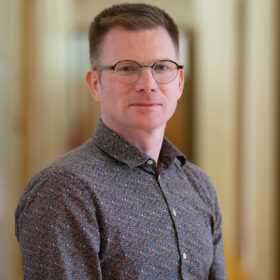
Nick Kuijpers is Innovation Lead within Plant Engineering at Volvo Cars Ghent, where he drives the exploration and deployment of next-generation manufacturing technologies across the three waves of AI transformation: Perception AI, Agentic AI, and Physical AI. He holds a Master's degree in Industrial Engineering (Computer Science) from ECAM Brussels Engineering School and has worked on AI projects at ENGIE, Railnova, MachineSight, and Siemens before joining Volvo Cars. Today, Nick focuses on bringing emerging AI technologies, such as humanoids, from research into real industrial environments, helping shape the future of manufacturing innovation.
Highway: connecting industry with state of the art in AI research
In de highway-sessies van VAIA en het Vlaamse AI-Onderzoeksprogramma brengen we de state of the art uit het Vlaamse onderzoek naar de Vlaamse bedrijven en industrie. Neem deel en blijf op de hoogte van hedendaags AI-onderzoek!
