Building Trustworthy AI in Healthcare
How do we harness the power of AI in healthcare while ensuring that the systems we build remain transparent, fair, privacy-preserving, and worthy of the trust placed in them by patients, clinicians, and society? In this Highway session, FAIR, VAIA, and UZ Antwerpen bring together leading researchers and healthcare experts to explore the foundations of trustworthy AI. Through cutting-edge research, participants will discover how advances in conversational AI, privacy-preserving data sharing, interpretable machine learning, and responsible AI can help transform healthcare while addressing critical challenges around explainability, bias, ethics, and governance. Join us to explore how people, data, and machines can work together to create AI solutions that are not only intelligent, but also trustworthy.
Praktische info:
Leertraject
georganiseerd door:





Program
13:00 - Welcome & registration
13:30 - Opening words
Sabine Demey (Flanders AI Research Program), Femke De Backere (VAIA - Flanders AI Academy) & UZ Antwerpen
14:00 - The AI-assistant in the consultation room: Language Models between training, scribing and trust
Walter Daelemans (UAntwerpen)
14:30 - Biomedical data sharing and privacy: An oxymoron in the age of digitalization and AI?
Yves Moreau (KU Leuven)
15:15 - Extracting domain insights with interpretable Machine Learning
José Antonio Oramas Mogrovejo (UAntwerpen)
15:45 - Fair enough? Bias in (Healthcare) AI systems
Sofie Goethals (UAntwerpen)
16:15 - From Research to Clinical Practice: Implementation and Evaluation of an Ambient AI Scribe in a Hospital Setting Eline Oeyen (AZ Voorkempen) & Eric Lodewyckx (PXL)
16:45 Q&A with all speakers
17:15 Network Reception
What can you expect of this study day?
This afternoon session explores how we can develop and deploy AI in healthcare that is not only powerful, but also trustworthy. Bringing together leading researchers and healthcare innovators, the program offers insights into:
- The use of conversational and large language models to support clinical training, decision-making, and medical documentation.
- Privacy-preserving and federated for unlocking the value of sensitive biomedical and patient data.
- Interpretable and explainable AI methods that help researchers and clinicians understand, validate, and discover patterns in complex healthcare data.
- Ethical and responsible AI practices, including fairness, bias mitigation, transparency, and accountability in healthcare settings.
Expect cutting-edge research and critical discussions on how to balance innovation with trust, privacy, and human oversight. The session concludes with healthcare use cases, a panel discussion, and ample opportunity to connect with peers during the networking reception
The AI-assistant in the consultation room: Language Models between training, scribing and trust
By Walter Daelemans - UAntwerpen
New language technology is rapidly changing how doctors communicate, train and document care. Prof. Daelemans, who leads the research line on conversational AI within the Flanders AI Research programme (FAIR), works from one concrete use case: a virtual avatar patient that medical students use to train their diagnostic and communication skills. A second language model acts as an AI critic, analysing these interactions and generating feedback. The same approach extends to intelligent medical scribing, the automatic and structured recording of consultations. A final topic that is discussed are the limits of trustworthiness for large language models in a clinical setting.
Biomedical data sharing and privacy: An oxymoron in the age of digitalization and AI?
By Yves Moreau- KU Leuven
Language models and interpretable AI have one thing in common: both need vast amounts of (biomedical) data to deliver value. But how do we share sensitive patient data without compromising privacy? Prof. Moreau develops federated, privacy-preserving AI methods for clinical genomics and drug discovery, with a focus on identifying disease-causing genetic variants in rare disorders. At the same time, he is one of the most prominent voices in the international debate on data misuse: his research into large-scale genetic surveillance has contributed to the retraction of scientific publications and the withdrawal of DNA test kits from sale in sensitive regions. Is privacy-preserving medical data sharing a contradiction in terms in the age of AI, or do technological and federated solutions exist that make both possible?
Extracting domain insights with interpretable Machine Learning
By José Antonio Oramas Mogrovejo - UAntwerpen
Interpretable machine learning began mainly as a debugging tool — a way to understand why an AI model got something wrong. Prof. Oramas, an expert in representation learning and model interpretation, shows how the field has since moved a step further. Interpretable AI (XAI) is increasingly used as a discovery tool: a way to surface complex, hidden patterns in medical and scientific data that would otherwise go unnoticed. He discusses how abstract AI benchmarks can be translated into usable, understandable insights for researchers and clinicians — and how interpretability is evolving from a necessary evil into a genuine partner in scientific discovery.
Fair enough? Bias in (Healthcare) AI systems
By Sofie Goethals (UAntwerpen)
We have discussed the applications, the insights and the underlying data behind machine learning systems — but how do we make sure they're actually fair? Sofie Goethals studies how bias enters machine learning models and how it can be measured and mitigated. She examines how algorithms can systematically disadvantage certain groups, the trade-offs between model performance and fairness, and how seemingly neutral modeling choices can produce unequal outcomes. What do researchers and practitioners need to translate abstract fairness principles into concrete evaluation practices?
From Research to Clinical Practice: Implementation and Evaluation of an Ambient AI Scribe in a Hospital Setting
By Eline Oeyen Goethals (AZ Voorkempen) & Eric Lodewyckx (PXL)
Can medical scribing help reduce the administrative burden in healthcare? This presentation shares the experiences from a living lab pilot at AZ Voorkempen, where the use of an ambient AI scribe by physicians, nurses and paramedics was evaluated via an independent mixed-methods resarch design. We discuss key findings, implementation challenges, legal considerations, and the technology's potential to support more efficient and sustainable care delivery.
Lesgevers / sprekers
Sabine Demey is the director of the Flanders AI Research Program. She brings together researchers from 11 research partners in Flanders (universities and research centres). Together they tackle challenging AI Research Challenges and apply the new AI methods in healthcare, in industry 5.0, for the energy transition, in society. She believes it is important for technological developments such as AI to have a meaningful impact on people, industry and society. Sabine is a computer scientist with a PhD in robotics. Prior to leading the AI Research Program in Flanders since 2020, she has 20+ years industrial experience in research, product and business development, software for the manufacturing industry and for healthcare.

Femke werkt deeltijds bij VAIA (Vlaamse AI Academie) als project leader. Daarnaast is ze ook aangesteld als hoofddocent aan de Universiteit Gent in het vakgebied Software Engineering. De focus van haar onderzoek ligt op het adaptief maken van softwaresystemen op een intelligente manier. Beseffen dat software-oplossingen niet altijd voor iedereen werken en dat er geen eenduidige aanpak bestaat staat hierbij centraal. Qua toepassingen focust zij vooral op het brede domein van de gezondheidszorg. Denk daarbij maar aan het personaliseren van het stimuleren van fysieke activiteit. Vandaar ook de sterke link tussen haar onderzoek en haar opdrachten binnen VAIA. De leertrajecten voor AI in de gezondheidszorg sluiten nauw aan bij haar interesses en expertise.

Walter Daelemans is professor of Artificial Intelligence and Natural Language Processing (NLP) at the University of Antwerp. He helped pioneer the statistical and machine learning revolution in NLP in the nineties with the development of Memory-Based Language Processing and with work on the methodology of machine learning for language processing. He was awarded EurAI and ACL fellowships for this work, and has published influential work on text mining and knowledge extraction from biomedical, clinical, and social media text, and on stylometry and author profiling. With currently 32 supervised PhDs graduated and more than 400 co-authored publications he is one of the most prolific NLP researchers in the Low Countries. In addition, he has been involved in the creation of high profile valorization results with popular open-source software such as TiMBL and Pattern, and has been instrumental in the creation of several spin-offs (textkernel, textgain, fluent.ai).

Yves Moreau is a professor at KU Leuven ESAT STADIUS, where his team develops AI algorithms and platforms for integrating complex data in clinical genomics and drug discovery: federated analysis of clinical and genomic data, identification of pathogenic genetic variation in rare disorders and liquid biopsies, and data fusion for drug design. He works on deep learning and Bayesian matrix factorization for fusing heterogeneous, sparsely observed data, and on privacy-preserving implementations, always with an eye on clinical and industrial applicability. He also reflects publicly on how AI is reshaping society and actively pushes back against the emergence of surveillance societies. As a tech innovator, he co-founded Data4S, a fraud detection and anti-money laundering company now part of BAE Systems Detica NetReveal, and Cartagenia, specialised in clinical genetic diagnosis and since acquired by Agilent Technologies.

José Oramas Mogrovejo is an assistant professor at IDLab, University of Antwerp and imec, where he joined in October 2019 and obtained tenure in September 2024. He holds an engineering degree from Escuela Superior Politécnica del Litoral in Ecuador and a PhD from KU Leuven (ESAT-PSI, 2015), supervised by Tinne Tuytelaars and Luc De Raedt. His current research covers representation learning, computer vision, and the interpretability and explainability of AI and machine learning models, with a focus on exploratory and explanatory models that identify informative intermediate representations.

Sofie Goethals is an assistant professor in the Department of Engineering Management at the University of Antwerp's Faculty of Business and Economics. Her current research focuses on various aspects of Responsible AI (regarding transparency, fairness, and privacy). She was previously a postdoctoral researcher at Columbia Business School.

Eline Oeyen holds a PhD in Medical Sciences and works as a Care and Innovation officer at AZ Voorkempen in Malle. In this role, she is involved in a range of research and innovation initiatives that support the development and implementation of innovative healthcare practices. As part of the CareAIgent research project, she contributes to a living lab pilot investigating the implementation of an ambient AI scribe in a real-world hospital setting. Drawing on her expertise, she helps bridge the gap between research, innovation, and everyday clinical practice.
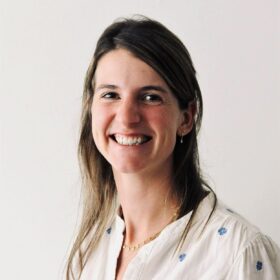
Eric Lodewyckx is a researcher and lecturer at PXL Healthcare Innovation, the expertise centre of PXL Hogeschool, dedicated to practice-oriented and evidence-based research in healthcare professionalisation and healthcare technology. As project leader of the VLAIO TETRA CareAIgent project, he investigates how AI can support healthcare professionals in reducing administrative burden, allowing more time for direct patient care. His expertise is further strengthened by his background as a Master of Nursing and Midwifery.

Highway: connecting industry with state of the art in AI research
In de highway-sessies van VAIA en het Vlaamse AI-Onderzoeksprogramma brengen we de state of the art uit het Vlaamse onderzoek naar de Vlaamse bedrijven en industrie. Neem deel en blijf op de hoogte van hedendaags AI-onderzoek!
