Current Trends in AI
Praktische info:
georganiseerd door:

Leertraject
Program
Agentic AI: How can multi-agent systems benefit your business? (Thursday, 29 January 2026)
This session is designed for businesses interested in discovering how multi-agent systems can enhance their operations. Are you curious about AI agents and how they collaborate to solve complex problems? Join us to explore the fundamentals, recent research developments, and real-world applications of these systems.
This session provides a historical overview of the development of agents and multi-agent systems, tracing their evolution from early conceptual models to their current role in complex, distributed AI applications. We begin with the foundational ideas of autonomous agents in the 1980s and 1990s, including seminal contributions in reactive and deliberative architectures. The emergence of multi-agent systems is discussed in the context of coordination, negotiation, and cooperation among agents, influenced by theories from economics, game theory, and cognitive science. We conclude with some use cases of what is today referred to as Agentic AI.
Professor Ann Nowé
Semantic Reasoning (Thursday, 19 February 2026)
In this session, we'll explore how semantic reasoning and knowledge graphs can add value to your data and processes. Knowledge graphs offer a powerful way to model complex relationships in your domain, while reasoning allows you to derive new insights automatically by interpreting your domain knowledge. Through concrete examples, we’ll show how these technologies can help you make smarter decisions, improve data integration, and unlock hidden value. We'll discuss how these technologies support interoperability and seamless data integration, making it easier to connect systems, share information, and build solutions that truly understand your domain.
Professor Pieter Bonte
Monitoring of rotating machinery with AI (Thursday, 19 March 2026)
Condition monitoring of rotating machinery, including fault detection, fault diagnosis and estimation of Remaining Useful Life (RUL), offers significant cost benefits to industry by minimizing unexpected downtimes and failures. Data-driven approaches, often based on Deep Learning, have achieved significant performance. However, limited data availability for model training, influence of varying operating conditions, lack of interpretability and need for robustness and reliability in predictions pose significant challenges in the application of AI based models in real-world applications. The goal of this talk is to present a methodology for diagnostics and prognostics under varying operating conditions, based on Digital Twins and Transfer Learning, which mitigates the need for large historical data for model training, estimating and quantifying in parallel the epistemic and aleatoric uncertainty of predictions, addressing the safety issues in RUL prediction. Moreover a domain transformation technique, which in combination with existing gradient-based XAI algorithms enables the explanation in a domain, different from the input domain of the machine learning model, will be introduced. The methodologies will be applied on different use cases from rotating machinery, with emphasis in rolling element bearings, and their performance will be discussed.
Professor Konstantinos Gryllias
Fairness in LLMs (Thursday, 23 April 2026)
This talk will explore how biases in AI language models can lead to unfair outcomes in real-world applications. We will examine methods for measuring and mitigating these biases, particularly across different languages. We will also address broader safety concerns and technical approaches to creating more fair and responsible AI systems.
Dr. Pieter Delobelle
Lesgevers / sprekers
Ann Nowé
Professor Ann Nowé is een vooraanstaand Belgisch computerwetenschapper, gespecialiseerd in artificiële intelligentie, met een focus op reinforcement learning, multi-agent systemen en verklaarbare AI. Ze is gewoon hoogleraar aan de Vrije Universiteit Brussel (VUB) en heeft een aanstelling bij zowel de Faculteit Wetenschappen als de Faculteit Ingenieurswetenschappen. Daarnaast is ze hoofd van het VUB Artificial Intelligence Lab, EurAI-fellow en actief betrokken bij de Agent Community (IFAAMAS).

Pieter Bonte
Professor Pieter Bonte is universitair docent aan de KU Leuven, campus Kulak, en is gespecialiseerd in de efficiënte verwerking van data van het Internet of Things (IoT) met behulp van verschillende takken van artificiële intelligentie (AI). Zijn onderzoek richt zich voornamelijk op kennisrepresentatie en redenering, met kernexpertise in semantisch redeneren en kennisgrafieken.

Konstatinos Gryllias
Professor Konstantinos Gryllias is hoogleraar werktuigbouwkunde aan de KU Leuven en is gespecialiseerd in AI-gebaseerde conditiebewaking van roterende machines. Zijn onderzoek richt zich op foutdetectie, diagnostiek en digitale tweelingen, waarbij hij signaalverwerking, machine learning en hybride modellering combineert. Hij leidt projecten in sectoren zoals de maakindustrie, energie en transport, en is verbonden aan Leuven.AI en Flanders Make.
Vaardigheden en expertise: Classificatie, Ongesuperviseerd leren, Patroonherkenning, Machine Learning, Kenmerkextractie, Signaalverwerking, Structurele Dynamica, Eindige-elementenanalyse, Spanningsanalyse, Eindige-elementenmodellering

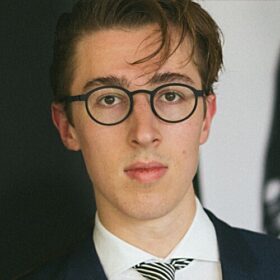
Pieter Delobelle
Pieter Delobelle is momenteel AI-ingenieur bij Aleph Alpha, waar hij zich richt op inferentie, alignment en billijkheid van grote taalmodellen. Voorheen was hij postdoctoraal onderzoeker aan de KU Leuven met een specialisatie in bias en billijkheid in grote taalmodellen en ontwikkelde hij ook het state-of-the-art Nederlandse taalmodel RobBERT. Hij behaalde in 2018 een masterdiploma in de industriële wetenschappen aan de KU Leuven op de Technologiecampus Gent, België. Vervolgens behaalde hij een masterdiploma in kunstmatige intelligentie aan de KU Leuven en bleef hij daar voor een doctoraat in de computerwetenschappen onder professor Bettina Berendt en professor Luc De Raedt, dat hij in 2019 startte en in 2023 verdedigde, getiteld 'Towards fairer foundation models'. Zijn huidige onderzoek naar bias en billijkheid in grote taalmodellen leidde tot onderzoeksverblijven aan het Weizenbaum Instituut en de Bocconi Universiteit, evenals een stage bij Apple Inc.
Gerelateerde opleidingen

