CALCULUS, on natural language understanding
As part of the ERC Horizon 2020 Advanced Grant “Commonsense and Anticipation enriched Learning of Continuous representations sUpporting Language UnderStanding” (CALCULUS), the CALCULUS Symposium highlights novel approaches in natural language understanding, an important subfield of artificial intelligence.
Praktische info:
Leertraject
georganiseerd door:


The symposium aims to encourage discussion among researchers on realizations and challenges, and will explore topics related but not limited to:
- Anticipatory and causal representation learning
- Brain-inspired machine learning
- Commonsense reasoning
- Continual learning
- Multi-modal representations grounded in the physical world
- Spatiotemporal reasoning
- Structured and compositional representation learning
- Text-to-image synthesis and control
The Symposium will feature 16 research talks from the CALCULUS team and keynote lectures by Mrinmaya Sachan, James Henderson, Mariya Toneva and Yuval Alaluf. Additionally, we invite the submission of abstracts to be presented as posters at the Symposium.

Schedule
Monday, 29 January 2024: Human-inspired Learning
- 12:00-12:30 Registration and coffee
- 12:30-12:45 Opening talk: Marie-Francine Moens (CALCULUS PI)
- 12:45-13:45 Prof. Dr. Mrinmaya Sachan (ETH Zürich): Towards a more Literate AI, and AI powered Learning Technologies
- 13:45-15:15 Session 1: Inference and Learning of New Knowledge
- 15:15-15:30 Coffee break
- 15:30-16:30 Dr. James Henderson (Idiap Research Institute): Bayesian Language Understanding with Nonparametric Variational Transformers
- 16:30-18:00 Session 2: Anticipation and Brain-inspired Representation Learning
Tuesday, 30 January 2024: Multi-modal Learning
- 8:45-9:00 Registration
- 9:00-9:15 Opening talk: Marie-Francine Moens (CALCULUS PI)
- 9:15-10:15 Prof. Dr. Mariya Toneva (Max Planck Institute Saarbrücken): Language Modeling beyond language Modeling
- 10:15-10:30 Coffee break
- 10:30-12:00 Session 3: Multi-modal Representation Learning
- 12:00-13:30 Lunch and poster presentations
- 13:30-14:30 Yuval Alaluf (Tel Aviv University): Exploring the Creative Possibilities of Generative Models
- 14:30-14:45 Coffee break
- 14:45-16:15 Session 4: Multi-modal Learning with Structures
- 16:15-16:30 Closing talk: Marie-Francine Moens (CALCULUS PI)
Keynote speakers
- Dr. James Henderson (Idiap Research Institute): Bayesian Language Understanding with Nonparametric Variational Transformers
- Prof. Mariya Toneva (Max Planck Institute for Software Systems): Language modeling beyond language modeling
- Prof. Mrinmaya Sachan (ETH Zürich): Towards a more Literate AI, and AI powered Learning Technologies
- Yuval Alaluf (Tel Aviv University): Exploring the Creative Possibilities of Generative Models
Sessions
Session 1: Inference and Learning of New Knowledge
- Aristotelis Chrysakis: “Continual Learning: How Neural Networks Expand their Knowledge”
- Vladimir Araujo: “Prediction and Integration for Natural Language Understanding”
- Ruben Cartuyvels: “Explicitly Representing Syntax Improves Sentence-to-layout Prediction of Unexpected Situations”
Session 2: Anticipation and Brain-inspired Representation Learning
- Mingxiao Li: “Controllable Text to Image and Video Generation and Its Application in Commonsense Reasoning”
- Florian Mai: “Large Language Models with a Working Memory”
- Jingyuan Sun: “Brain Encoding and Decoding for Visual and Language Perception”
Session 3: Multi-modal Representation Learning
- Damien Sileo: “Visual Grounding Strategies for Text-Only Natural Language Processing”
- Nathan Cornille: “Causality and Representation Learning”
- Graham Spinks: “Generating Textual and Visual Explanations of Radiography Images”
Session 4: Multi-modal Learning with Structures
- Wolf Nuyts: “Focus your Attention: Improving Text-to-Image Generation with Syntactical Restrictions”
- Victor Milewski: “Structured Representations in Visual and Language Data, and Their Correlations”
- Maria Trusca: “Text-based Control for Image Manipulation”
Registration
You can find more information about registration here.
Organising team
Lesgevers / sprekers
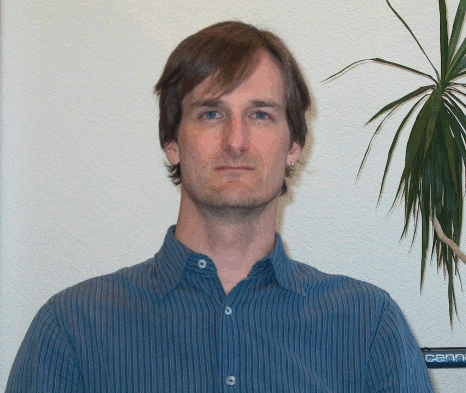
Dr James Henderson is a Senior Researcher at the Idiap Research Institute, Switzerland, where he heads the Natural Language Understanding group. He is currently an Action Editor for the journal Transactions of the Association for Computational Linguistics (TACL). He worked previously at University of Geneva, Xerox Research Centre Europe, University of Edinburgh, and University of Exeter, and received his PhD from University of Pennsylvania. His research is in the area of machine learning methods for natural language processing, including the earliest successful work on neural networks for syntactic parsing, recent graph-to-graph versions of Transformers, and current work on variational-Bayesian attention-based representation learning for entity disentanglement.
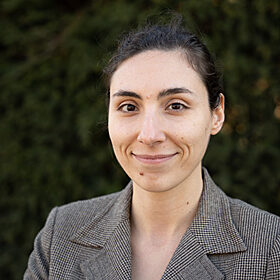
Prof. Mariya Toneva joined the tenure-track faculty at the Max Planck Institute for Software Systems, where she leads the BrAIN (Bridging AI and Neuroscience) group. Her research is at the intersection of Machine Learning, Natural Language Processing, and Neuroscience, with a focus on building computational models of language processing in the brain that can also improve natural language processing systems. Prior to MPI-SWS, she was a C.V. Starr Fellow at the Princeton Neuroscience Institute and obtained her PhD from Carnegie Mellon University in a joint programme between Machine Learning and Neural Computation.
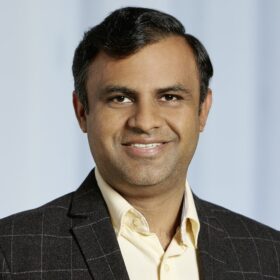
Prof. Mrinmaya Sachan is an Assistant Professor of Computer Science at ETH Zürich. His research is in the area of Natural Language Processing and the interface of Machine Learning and Education. Prior to this position, Mrinmaya was a Research Assistant Professor at TTI Chicago. Before that, he received a PhD from the Machine Learning Department at CMU and a Bachelor of Technology in Computer Science from IIT Kanpur where he received an Academic Excellence Award. He has received several awards for his work, including an outstanding paper award at ACL 2015, an IBM PhD fellowship, the Siebel scholarship and the CMU CMLH fellowship. His current research is funded by grants from the Swiss National Science Foundation, the ETH Zurich foundation and Haslerstiftung.
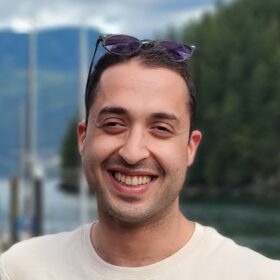
Yuval Alaluf is a PhD student studying Computer Science at Tel Aviv University, advised by Prof. Daniel Cohen-Or. Yuval’s current research centers around image generation and image editing, with a particular focus on using large vision-language models to provide users with more creative freedom.