The AI booth at the FTI Closing Festival
Come visit our AI booth and find out all about AI now and in the future. From intriguing demos to compact lectures, we will show you what AI can do today and where the technology is heading.
We invited several AI experts to explain their activities around, or research into, AI in Flanders.
Practical information:
Georganiseerd door:


Programme
Saturday 23 March
10u30 Pieter Libin (VUB)
Van videospelletjes naar pandemieën
11u Jef Van Laer (Scivil)
amai! - ook jij kan bijdragen aan AI-oplossingen
11u30 Marie Verougstraete (NextGenics)
Explain MED - medische verslagen begrijpelijk maken
12u30 Sarah Doumen (Vlaams AI-onderzoeksprogramma)
Introductie tot het Vlaams AI-onderzoeksprogramma
13u Leander Schietgat (VUB)
AI to improve energy distribution via smart grids
13u30 Lisa Hilte (VAIA & UAntwerpen)
Vraagarticulatie: welke opleidingen hebben kmo’s nodig om met AI te starten?
14u Alexander Botzki (VIB)
How AI technologies help us improve our educational offerings
15u Mattijs Baert (UGent)
Kunnen robots onze regels leren?
Sunday 24 March 2024
10u30: Christos Chatzichristos (KU Leuven)
AI in Healthcare. Hype or Help
11u Michiel Vaes (VUB)
amai! - ook jij kan bijdragen aan AI-oplossingen
11u30 Alexandru Cristian Mara (UGent)
AI for HR & the job market
12u Ellen De Geyndt (UGent)
Van onderzoek tot ondernemen: sentimentanalyse voor bedrijven
12u30 Colin Swaelens (UGent)
Botsen we tegen de limieten van de GPT-familie?
13u00 Stefaan Gruyaert (VAIA)
Vraagarticulatie: Welke opleidingen hebben kmo’s nodig om met AI te starten?
14u Annelies Lejon (UGent)
Hoe werkt een AI model? De weg van data over training naar toepassing.
14u30 Tony Belpaeme (UGent)
Social robots for education
15u00 Sarah Doumen (Vlaams AI-onderzoeksprogramma)
Introductie tot het Vlaams AI-onderzoeksprogramma
amai's Great-What-Do-You-Think-Is-It-With-A.I.-Or-Not? quiz
Take part in amai's Great-What-Do-You-Think-Is-It-With-A.I.-Or-Not? quiz.
And what do you think should still be invented? We will show on the spot what your idea looks like using our homegrown A.I. system.
AI research in Flanders
AI research is not standing still in Flanders. imec and the Flemish AI research programme are putting their backs into it. At the FTI Final Festival, you can learn about the future of AI, in various demos and some speaker sessions.
About Flanders Technology & Innovation (FTI)

FTI Festivals 2024
evenement - Vlaanderen - Flanders Innovation & Technology
Teachers / speakers
Mattijs Baert
Mattijs Baert received the B.S (2017) and M.S. (2018) in Electronics and ICT engineering technology magna cum laude from Ghent University, Belgium. In 2020, he started pursuing his PhD at the Department of Information Technology also at Ghent University. His main research interests are inverse (constrained) reinforcement learning and neural-symbolic AI. Mattijs also teaches various courses in the bachelor of Science in Information Engineering Technology programme.
His expertise can be found in machine learning, deep learning, reinforcement learning, inverse reinforcement learning, neuro-symbolic AI.
Tony Belpaeme
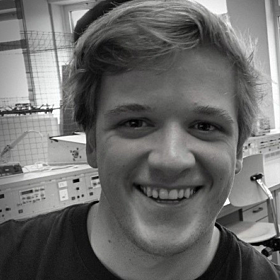
Tony Belpaeme is Professor at Ghent University and Professor in Robotics and Cognitive Systems at the University of Plymouth, UK. He received his PhD in Computer Science from the Vrije Universiteit Brussel (VUB). He leads a team studying cognitive robotics and human-robot interaction. He currently coordinates the H2020 L2TOR project, studying how robots can be used to support children with learning a second language, and coordinated the FP7 ALIZ-E project, which studied long-term human-robot interaction and its use in paediatric applications, and worked on the FP7 DREAM project, studying how robot therapy for Autism Spectrum Disorder. Starting from the premise that intelligence is rooted in social interaction, Belpaeme and his research team try to further the science and technology behind artificial intelligence and social human-robot interaction. This results in a spectrum of results, from theoretical insights to practical applications.

Alexander Botzki
Dr. Alexander Botzki is heading the Technology training unit VIB, the Flemish Institute of Biotechnology, Belgium. The main mission of this unit is providing technology training in domains of VIB Technologies, Bioinformatics & AI, Software Development, and Research Data Management. Between2014 and 2022, he was head of the VIB Bioinformatics Core. From September 2009 to July 2014, he was responsible for the roll-out of E-Notebook (electronic lab notebook) to VIB’s researchers within 75 research groups. Before joining VIB, Alexander worked on various computational biology projects for Algonomics (bought by Lonza, 2008/2009) and DevGen (now Syngenta, from 2006-2008). During Alexander’s PostDoc at Sanofi Aventis in Strasbourg, he executed various virtual screening campaigns on the compound collection of the merged enterprise. He received his doctoral degree with the group of Prof. Dr. Armin Buschauer (University of Regensburg, Germany) on ‘Structure-based design of hyaluronidase inhibitors’.
Christos Chatzichristos
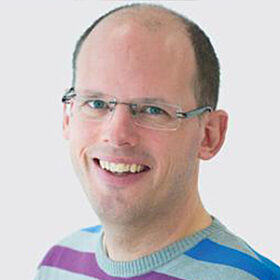
I am Christos Chatzichristos, currently a post-doctoral researcher at KU Leuven. My educational background revolves around electrical and computer engineering, with a specialization in Biomedical Applications and an emphasis on signal processing during both my Master's and Ph.D. studies. During my doctoral journey, I witnessed the profound impact of neural networks on the field of signal processing, marking the inception of my foray into the realm of AI applications. I hold a strong belief in fostering broad interdisciplinary collaborations, as I believe that research today cannot thrive in isolation within a single domain. Artificial intelligence stands as a potent tool to expedite healthcare research. However, to truly harness its potential, we must bridge the gap by facilitating healthcare professionals' understanding of fundamental AI concepts, just as they aid biomedical engineers in unraveling the mysteries of the human body. So, here's to using AI to accelerate healthcare research while ensuring that we all speak the same language – whether it's the language of algorithms or the language of anatomy!

Alexandru Cristian Mara
Alexandru Mara is one of the Co-Founders and CEO of Nobl.ai, a tech startup focused on delivering trustworthy AI for the labour market. Simultaneously, Alexandru holds a part-time appointment as a postdoctoral researcher in the Artificial Intelligence and Data Analytics group at Ghent University. His research interests revolve around recommender systems and representation learning as well as their applications to the labour market. Over the past decade, Alexandru has built an international academic career in AI and data mining obtaining his PhD from Ghent University in Belgium, MSc from Aalto University in Finland and BSc from the Technical University of Madrid in Spain. He was also part of the ERC projects ONTIC and COGNET focused on AI for telecommunication networks.
Expertise: AI techniques for the job market with particular emphasis on Network representation learning, recommender systems, link prediction, and experimental design and evaluation
Ellen De Geyndt
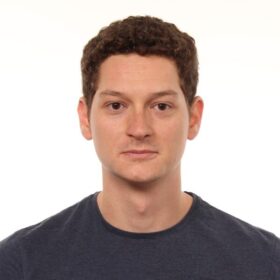
Ellen De Geyndt is founder van de UGent spin-off Alfasent. Haar passie voor zowel taal en technologie brachten haar in 2021 naar de onderzoeksgroep LT3 (taaltechnologie) aan de vakgroep Vertalen, Tolken en Communicatie. Tijdens haar onderzoeksproject ontwikkelde ze de AI-modellen die vandaag achter de Alfasent-technologie zitten.
Alfasent biedt software aan die bedrijven helpt om grote hoeveelheden klantenfeedback automatisch te analyseren. Zo kunnen bedrijven snel in kaart brengen waar klanten tevreden over zijn en waar bijgestuurd moet worden

Lisa Hilte
Lisa Hilte is doctor of linguistics. For years, she worked as a linguistic researcher and lecturer at the University of Antwerp. Today, she works for VAIA as an AI expert and liaison for UAntwerp. In addition, she is a freelance writer with a focus on science journalism, and a freelance teacher in AI and language technology. She has published two sets of course materials on language technology, for pupils and teachers in the third grade of secondary education (Plantyn publisher).

Jef Van Laer
Adviseur Citizen Science

Annelies Lejon
Annelies Lejon is currently a postdoc at IDLab (AIRO) - UGent, where she specializes in sign language recognition. She obtained a PhD in applied mathematics from KU Leuven in 2016. Afterwards, she gained experience in a broad range of applications of Artificial Intelligence ranging from anomaly detection, language modelling and speech recognition.
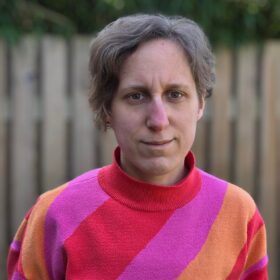
Pieter Libin
Prof. Pieter Libin graduated in 2014 at Vrije Universiteit Brussel in Informatics and obtained his PhD in Computer Science at VUB in 2020. After his PhD, he held a postdoctoral position funded by the Flemish science foundation at Hasselt university, at the department of data science. Since October 2021, Pieter is active as an assistant professor at the AI lab of the Vrije Universiteit Brussel. His research involves the use of machine learning to support decision makers by combining machine learning techniques with realistic simulation models and concerns theoretical and applicational AI with a focus on reinforcement learning and Bayesian modeling. He has a broad experience in modeling and analyzing real-world systems ranging from virus diversity, epidemic emergencies, and renewable energy providers. Pieter is a member of the Jonge Academie, an association of young top researchers and artists with an engagement to policy, society, research, and the arts. Pieter is a board member of the Benelux Association for Artificial Intelligence.

Leander Schietgat
Leander Schietgat received his degrees of MSc. in Informatics and Ph.D. in Machine Learning from KU Leuven in 2005 and 2010, respectively. His research interests include machine learning and data mining for life science applications. Since 2018, he is business developer at the Artificial Intelligence Lab of the Vrije Universiteit Brussel (VUB), responsible for spotting opportunities to apply AI technologies and to set up collaborations with companies and organizations. In 2019, he became research manager in the Flanders AI Research Plan.

Colin Swaelens
My research at the Language & Translation Technology Team research group (UGent) is at the intersection of classical philology on the one hand and the wonderful world of language technology on the other. The quantitative advantage of training high-performance transformer models for the automatic processing of prescribed texts is not on our side. Qualitative data is our absolute basis.
Colin's expertise lies in language technology, ancient language processing, and low-resource languages.

Michiel Vaes
Michiel is a researcher at imec-SMIT-VUB as a member of the Knowledge Center Data & Society (KCDS). He is engaged in different projects related to smart cities, data privacy, artificial intelligence and public outreach.
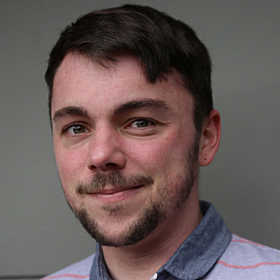
Marie Verougstraete
Medtech Business Strategist

FTI Festivals 2024
Flanders Technology & Innovation, FTI, brings everyone together around technology and innovation and is a driver of sustainable prosperity. So we put our heads together. Noses in the same direction. Because only together can we tackle the big challenges of the future. With knowledge centres, private partners, the government and citizens. Including you.
With concrete projects that improve the life of every person in Flanders, we bring everyone together. We do this in six crucial areas: data technology, health, energy, mobility, entertainment and lifelong learning. This is how we strengthen our reputation and position as an ambitious, open region that is at the top of the world in terms of scientific innovation. Discover our projects for yourself during the FTI festival across Flanders and, of course, at the grand finale taking place in Antwerp.

Related courses


Machine learning and deep learning fundamentals
Workshop - Leuven - VIB, Training geselecteerd in de Belgische AI Factory Antenna (AIFA)