Philosophy of Artificial Intelligence
Artificial Intelligence (AI) is developing at an extremely rapid pace. It is commonplace to say that the technology is everywhere today. However, with the exponential growth of AI, there is an increasing need for clarification and awareness for people working in and with AI in their respective working and learning environments. In this course you get insight in the philosophical issues raised by current and future AI systems.
Praktische info:
Inschrijven?
- Inschrijvingen: tot 24 sep. 2024
- Voorwaarden: Notions of artificial intelligence
- Prijs: €450
12 lessen, 19-21u op dinsdag. Geen les tijdens de herfstvakantie
Registratie opent vanaf 10 juni 2024.
24 september
30 september
1, 8, 15 en 22 oktober
herfstvakantie
5, 11, 18 en 25 november
3, 10 en 17 december 2024
georganiseerd door:


From introduction to social and ethical implications
The course "Philosophy of Artificial Intelligence" is organised around several basic questions. Plenty of things receive the “AI” label, but what exactly does this label mean? Can we really say that machines can 'think'? What does thinking consist of, and, related to this, can it be said that machines in some sense have become "conscious"? How different can a form of thinking be from our own and still be said to count as thinking or experience and what does the use of "machine thinking" or "machine consciousness" tell us about our own human thinking and consciousness?
Can we even say that in some ways, machines are somehow "alive"? Furthermore, the use of AI techniques raises huge social and ethical questions, such as: does the reliance on algorithms improve fairness or does it actually make things worse (bias)? As machines become more ‘intelligent’, who is responsible when things go wrong (f.e. in the case of self-driving cars)? Will machines eventually surpass humans and become a threat (as Steven Hawking and others have claimed)?
In this course we will explore these issues through lectures, discussions and readings discussed in class.
Learning goals
By the end of the course, participants should be able to:
- reflect critically on the general implications of AI and its techniques.
- participate in the general debate on the use of AI and its techniques
- have acquired tools for practical use in the evaluation of AI methods in their respective working or learning environments
In this course, you will gain an in-depth understanding of artificial intelligence and the possible ethical implications of decisions taken along the AI development trajectory. You will be able to advise your colleagues and clients with specific questions concerning the ethical results of their AI development and the possible implications upon their legal framework.

Course Content
- Introduction
- What is AI?
- The History of AI
- Distinction between 'artificial' and 'natural'
- Can machines think / be intelligent
- The mind-body problem
- Philosophy of mind
- Concepts: supervenience, dependence, physicalism
- What is the "mental"?
- Theories on the mind-body problem
- The Turing test
- Searle's "Mind, Brains and Programs"
- Computational conceptions of the mind
- Can Machines be conscious?
- Introduction
- Properties of consciousness
- Does consciousness supervene on physical properties?
- The limits of AI
- Personal identity and AI
- Computational limits of AI
- Can Machines be Alive?
- What is artificial life?
- What is life?
- The Ethics of AI
- Ethics and AI
- From AI ethics to AI Policy and Law
Lesgever/spreker
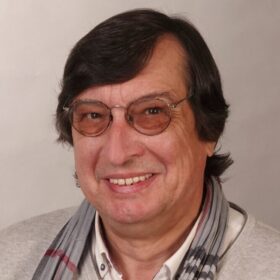
Roger Vergauwen
Roger Vergauwen studeerde aan de Katholieke Universiteit Leuven (doctoraat in de filosofie, 1987), waar hij emeritus hoogleraar filosofie is met formele taken bij het Instituut voor Filosofie (Centrum voor Logica en Filosofie van de Wetenschappen). Hij was senior onderzoeker bij het Belgisch Nationaal Fonds voor Wetenschappelijk Onderzoek (NFWO-FNRS), senior onderzoeker aan de Universiteit van Pittsburgh (VS) en gasthoogleraar aan de universiteiten van Urbino (Italië) en Lublin (Polen).
Momenteel is hij ook voorzitter van het Belgisch Nationaal Centrum voor Onderzoek in de Logica (NCNL-CNRL).
Hij heeft colleges gegeven in de filosofie van de geest en kunstmatige intelligentie, logica (inleidend en gevorderd) en wetenschapsfilosofie, filosofie van de logica en taal, grondslagen van formele taaltheorieën en Russische filosofie.
Zijn onderzoek richt zich op de filosofie van het bewustzijn, de filosofische implicaties van onvolledigheidstheorema's in kunstmatige intelligentie en de formele semantiek van natuurlijke talen.
Gerelateerde opleidingen

