AI in Psychological Sciences
The BAPS Junior Board will organize five workshops during the BAPS 2024 conference, covering a diverse range of topics. Two workshops explore the use of machine learning and artificial intelligence in research.
Practical information:
Leertraject
Georganiseerd door:



Machine Learning for Research
Speaker: Dr. Wivine Blekic (LinkedIn)
This session aims to demystify the core concepts of machine learning (ML) and illustrate its application in the mental health field. The workshops starts with an introduction to ML, covering its basic principles, types of algorithms, and explaining how and why these tools can be utilized to analyze complex datasets.
Dr. Blekic will present specific case studies where machine learning approaches have been employed to identify predictors of Post-Traumatic Stress Disorder (PTSD) and suicidal ideation. The goal of this workshop is to equip attendees with the tools to (1) understand the benefits of ML approaches in mental health, (2) comprehend the methods section of a paper that used ML approaches, and (3) have some references to further explore ML approaches on their own.

The Use of Generative Artificial Intelligence for Daily Research
Organized by VAIA (Speaker: Dr. Pieter Fivez)
This workshop will contextualize Generative Artificial Intelligence for researchers and practitioners in the field of psychology. A theoretical framework will be followed by a discussion of several prototypical use cases, including such applications as automated literature review and research assistance for setting up methodologically sound experiments. Specific attention will also be given to ethical and practical challenges, such as plagiarism and fabricated citations by ChatGPT.
Teacher / speaker
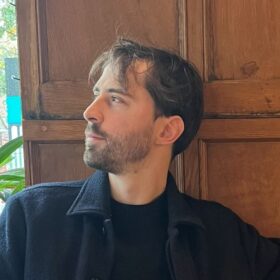
Pieter Fivez
Pieter Fivez holds a PhD in Linguistics from the University of Antwerp, focusing on machine learning of semantic representations of biomedical text. He currently works as a postdoctoral researcher at the University of Antwerp, where he coordinates the Antwerp Text Mining Centre (TEXTUA).