Transforming Food Processing: Sensors, AI and the path to sustainability
Praktische info:
Inschrijven?
- Voorwaarden: A technical background is highly recommended.
- Prijs: € 585
georganiseerd door:


Digital technologies are revolutionizing food systems, with sensor technologies driving significant advancements in food processing and manufacturing. The adoption of sensor technologies in the food processing industry is accelerating due to their increasing affordability, precision, and accessibility.
The food processing industry expects sensors to meet exacting performance requirements, including resistance to harsh processing conditions like high/low temperatures, humidity, chemical exposure, and vibrations. Simultaneously, they must capture precise data at high speeds to support real-time decision-making during production processes. Integrating these sensors into complex production environments involves challenges related to data acquisition, processing, and visualization. Advanced AI and machine learning solutions play an essential role in transforming raw sensor data into actionable insights, enabling informed decisions that optimize efficiency, safety, and sustainability. Recent advancements in computational power and data-driven algorithms open up new opportunities for improved monitoring and insight generation in food processing. These developments enhance sustainability and operational efficiency by enabling better quality control, process optimization, and resource management.
Programma
1. State-of-the-art overview of sensor technology in food processing
Ensuring product quality is a top priority in the food industry and advances in sensor technology are enabling faster, more reliable and non-invasive quality assessment methods. In this session you will gain a broad yet practical overview of sensing technologies relevant to food processing and quality control. We will begin with fundamental sensing principles and then explore more recent technologies that can rapidly assess key quality attributes such as composition, freshness, contamination, and texture. Through real-world examples and industry case studies, we will discuss the strengths and limitations of different sensor systems and their suitability for various food applications. To conclude, we will introduce a technology-application matrix, a practical decision-making tool to help food companies identify the most effective sensor solutions for their specific challenges.
Lecturers:
- Jonas Lannoo, Senior Researcher IoT, Mechatronics and Robotics, Vives
- Bart De Ketelaere, Research Manager, MeBioS, KU Leuven
Case study: to be confirmed
2. System integration & data infrastructure
Collecting data in rural and harsh environments has quite some challenges. Mostly, data captured at sensors have to use non-traditional means of communication to be collected at the server, where analysis is done. In this session, you will learn how to define data, how to format it and how to send it over a very constrained environment and limited bandwidth to the server. We will discuss some common wireless communication methods and give insight into their advantages and disadvantages. Further, we will dive into the concept of edge computing, where data is analysed at the edge using embedded computing. We will conclude with the contemporary trend of machine learning at the edge and how complex analysis can be done at battery-powered constrained devices.
Lecturer:
- Hans Hallez, Associate Professor, DistriNet, KU Leuven
Case study: to be confirmed
3. Data analysis techniques
In this session, we will delve into the complex task of transforming raw data into meaningful information, which must be delivered to the right user at the right moment. This phase of data analysis and processing presents its own set of challenges. Often, decisions need to be made swiftly in real-time during production processes, requiring the use of sophisticated, real-time AI solutions that can process data quickly and accurately. Despite these technological hurdles, when effectively implemented, sensors offer substantial advantages by improving quality, safety, and efficiency. Techniques for data analysis, including artificial intelligence (AI), machine learning, deep learning, and decision-making processes, are essential for extracting insights from sensor technology.
Lecturer:
- Mathias Verbeke, Assistant Professor in Artificial Intelligence for Industry, KU Leuven
Case study: ILVO, Bert Callens
Lesgevers / sprekers
Jonas Lannoo
PhD, Liaison Officer Mechatronics between University College VIVES and KU Leuven, Senior Researcher of the Research Group Mechatronics at VIVES, TinyML Teacher and Researcher, Bruges.
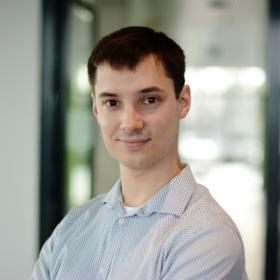
Bart De Ketelaere is Innovation Manager (IOF) at the MeBioS division of the Department of Biosystems. He combines a Master in Bioscience Engineering (KU Leuven) and a Master in Statistics (UHasselt). During his PhD, he worked on the broad field of industrial quality control with applications in agrifood. His main interest is in combining novel sensor technologies and data analytical tools for product and process control. His AI-related interest relates to building and maintaining models in case of limited data, as well as to the analysis of (hyperspectral-) images and spectra. He is (co-)author of +150 peer reviewed papers and several patents. Besides, he is co-founder of two spin-off companies, both active in the field of data science.
Keywords: industrial quality control, Agrifood, Image Analysis, Applications of statistics, machine learning & AI

Hans Hallez is a lecturer (Docent) of physics and informatics to 1st year (freshmen) academic bachelor Industrial Engineering students. This is within the faculty of Industrial Engineering (FIIW) of the KU Leuven (TechnologyCampus Oostende). In the final master year, he also teaches "optoelectronic communication" to electronic engineering students.
His research interests are within electronic implementation for medical and industrial applications. More specifically his interest lies in the implementation of signal-processing algorithms within programmable wireless sensor networks. He is also interested in new sensors and measurement techniques.
Hallez is proficient in conducting research concerning electronics, physics and ICT with medical applications. From the more fundamental research on EEG and ECG signal processing at the UGent, he's gone to research on a demand-driven and practical basis at KU Leuven. There he is responsible for teaching and conducting research.

Mathias Verbeke is als professor Artificiële Intelligentie verbonden aan de Faculteit Industriële Ingenieurswetenschappen van KU Leuven. Op de campus in Brugge maakt hij deel uit van de Mechatronics Group (M-Group), een interdisciplinaire onderzoeksgroep die expertise verzamelt op vlak van intelligente, betrouwbare en geconnecteerde mechatronische systemen. Hij focust er op de uitdagingen die gepaard gaan met de industriële toepassing van artificiële intelligentie. Mathias is verder ook verbonden aan Flanders Make, het strategisch onderzoekscentrum voor de maakindustrie, en Leuven.AI, het KU Leuven Instituut voor Artificiële Intelligentie.
