Flanders AI Research Day
Mark your calendar for October 14th! The Flanders AI Research Program (FAIR) is thrilled to invite you to our most anticipated event of the year— The Flanders AI Research Day, hosted at the iconic Wintercircus in Ghent.
Praktische info:
georganiseerd door:


Key highlights you don't want to miss:
- Engage with leading minds: Meet and network with 500 AI researchers (from the organizing Flanders AI Research Program and from companies, research centers, etc.). This is your chance to connect with experts eager to share insights and foster new collaborations.
- Stay ahead of the curve: Get a first look at the latest research breakthroughs and state-of-the-art innovations. Research Day offers an exclusive opportunity to stay informed on the cutting edge of AI.
- Forge new partnerships: Discover funding opportunities for collaborative projects and learn how you can partner with our research groups to push the boundaries of AI.
- Fuel your creativity: Be inspired by talks from world-renowned speakers and hands-on demonstrations of real-world AI applications. Plus, explore the exciting projects of 100 PhD students ready to showcase their work.Don’t miss this extraordinary event at a truly unique venue—an opportunity to connect with the vibrant Flanders AI research community.
Registration for the Flanders AI Research Day is free, but mandatory. Secure your spot today to ensure access to all sessions and demos. We can’t wait to welcome you on October 14th!
Unlock the future of AI by joining us! Immerse yourself in cutting-edge research, meet brilliant minds, and be part of the innovation driving Flanders forward.
Program
09.00-09.15 Arrival, registration, coffee
09.15-10.15 Interactive showcase "Posters" (part I)
09.15-13.00 Interactive showcase "Uses cases Demos"
10.15-11.40 Opening plenary: Insights and pitches from the Flanders AI Research Program (FAIR)
11.40-12.00 Break
12.00-13.00 Breakout sessions (I)
13.00-13.45 Lunch
13:30-14:30 Interactive showcase "Posters" (part II)
13:30-17:00 Interactive showcase "Uses cases Demos"
14:30-15:30 Breakout sessions (II)
15:30-16:00 Break
16:00-17:00 Breakout sessions (III)
17:00-18:00 Closing reception
Breakout sessions (I) (12:00-13:00)
LLMs in Flanders: Training, Generation and NLP Applications for Text and Speech
Moderator: Pieter Delobelle (KULeuven)
Speakers: Prof. Thomas Demeester (UGent), Ehsan Lotfi and Nicolae Banari (UAntwerpen), Ying Jiao (KU Leuven), Prof. Hugo Van Hamme (KU Leuven)
Advances in Explainable AI (deep dive I)
Note: (The explainable AI deep dive session consists of 2 parts, it is possible to follow both, or a single one)
Speakers: Prof. David Martens (UAntwerpen), Prof. José Oramas (UAntwerpen), Prof. Nikos Deligiannis (VUB)
Advances in AI-based Knowledge Discovery
Speaker: Prof. Jefrey Lijffijt (UGent)
Reinforcement Learning (RL) for Industrial Applications
Moderator: Bruno Depraetere (Flanders Make)
Speakers: Bruno Depraetere (Flanders Make), Denis Steckelmacher (VUB), Gaoyuan Liu (VUB), Tom Lefebvre (UGent)
Situated AI (GC2) advances and highlights
Uncovering Hidden Patterns: Advanced Anomaly Detection with Generative AI
First talk: Knowledge guided deep learning
Speaker: Prof. Peter Karsmakers (KULeuven)
Second talk: An Agentic Retrieval Augmented Generation approach for failure resolution in manufacturing processes (Mathias Verbeke)
Speaker: Prof. Mathias Verbeke (KULeuven)
Moderator: Dries Verhees (Flanders Make)
Breakout sessions (II) (14:30-15:30)
AI on the Edge
First talk: Generative AI Multi-Agent Systems at the Edge: Strategies for Inference, Workflow Optimization, and Hardware Implications
Speaker: Tanguy Coenen, imec
Second talk: FAIM Box v2 - a toolbox for AI researchers and system developers
Speaker: Maarten van der Burgt, imec
Neurosymbolic learning and reasoning for trustworthy AI
Speaker: Prof. Luc De Raedt (KU Leuven)
AI for Images & Video
Moderator: Prof. Tinne Tuytelaars (KU Leuven)
First talk: Animate Your Motion: Turning Still Images into Dynamic Videos
Speaker: Bo Wan (KU Leuven)
Second talk: Easily Accessible 3D Content - free viewpoint video met neural rendering
Speaker: Minye Wu (KU Leuven)
Third talk: Recognizing Tables from Industrial Documents: Challenges and Solutions based on Visual modeling
Speaker: Van Beersel Arthur (VUB)
Advances in Explainable AI (deep dive 2)
Note: The explainable AI deep dive session consists of 2 parts, it is possible to follow both, or a single one.
Speakers: Prof. Katrien Verbert (KU Leuven), Prof. Toon Calders (UAntwerpen), Prof. Vincent Ginis (VUB), Thomas Doom (UAntwerp)
Introduction to Bayesian Optimization: Techniques, Applications, and Strategies
Moderators: Prof. Ivo Couckuyt, Prof. Tom Dhaene (imec, UGent)
Infosession - Flemish funded projects: bridging reseach & industry
Privacy Aware Digital Assistant for Operators
Moderators: Ewoud Verhelst & Bart Van Doninck (Flanders Make)
Exploring Efficiency in Multimodal Training (PEFT) and Learning by Teaching (LbT)
First talk: Introducing Routing Functions to Vision-Language Parameter-Efficient Fine-Tuning with Low-Rank Bottlenecks (multimodal, vision and language)
Speaker: Tingyu Qu (KU Leuven)
Second talk: Can LLMs Learn by Teaching? A Preliminary Study
Speaker: Zifu Wang (KU Leuven)
Third talk: On Compatible Loss Functions for Semantic Segmentation
Speaker: Zifu Wang (KU Leuven)
Fourth talk: Combining multiple learning tasks with multi-view kernel principal component analysis
Speaker: Sonny Achten (KU Leuven)
Fifth talk: Highly preliminary title: Visualization and interpretation of decision making pathways for optimizing neural network architectures
Speaker: Christopher Patzanovsky (UHasselt)
Moderator: Prof. Matthew Blaschko (KU Leuven)
Overview of GC1 AI-driven Data Science
AI for the living environment
First talk: Enhancing environmental modelling using AI & remote sensing
Speakers: Stijn Vranckx, Tanja Van Achteren (VITO)
Second talk: Decision focused learning for environmental applications
Speaker: Alessandro Barbini (UGent)
Third talk: Object-centric representation learning with applications in remote sensing
Speaker: Nikola Đukić (KU Leuven)
AI for Healthier Aging: Concrete innovations in MS Diagnosis and Elder Care (30 min, from 16:00 to 16:30)
Neurosymbolic learning and reasoning - Deep dive
First talk: Interpretable Neurosymbolic Concept Reasoning
Speaker: Prof. Giuseppe Marra (KU Leuven)
Second talk: Knowledge guided deep learning
Speaker: Prof. Peter Karsmakers (KU Leuven)
Third talk:Decision-Focused Learning: Foundations, State of the Art, Benchmark and Future Opportunities
Speaker: Prof. Tias Guns (KU Leuven)
Fourth talk: Knowledge Graphs for Machine Learning
Speaker: Ioannis Dasoulas (KU Leuven, FlandersMake)
Aleatoric and epistemic uncertainty in machine learning: a tutorial introduction
Speaker: Prof. Willem Waegeman (UGent)
AI for E2E optimization in manufacturing systems
Moderator: Jeroen Jordens (Flanders Make)
Sustainable AI: How to Avoid the Next AI Winter
Speaker: Prof. Steven Latré (imec)
AI for a Smarter Grid: Innovations in Data Analysis and Visualization (30 min, from 16:30 to 17:00)
Lesgevers / sprekers
Pieter Delobelle
Pieter Delobelle is momenteel AI-ingenieur bij Aleph Alpha, waar hij zich richt op inferentie, alignment en billijkheid van grote taalmodellen. Voorheen was hij postdoctoraal onderzoeker aan de KU Leuven met een specialisatie in bias en billijkheid in grote taalmodellen en ontwikkelde hij ook het state-of-the-art Nederlandse taalmodel RobBERT. Hij behaalde in 2018 een masterdiploma in de industriële wetenschappen aan de KU Leuven op de Technologiecampus Gent, België. Vervolgens behaalde hij een masterdiploma in kunstmatige intelligentie aan de KU Leuven en bleef hij daar voor een doctoraat in de computerwetenschappen onder professor Bettina Berendt en professor Luc De Raedt, dat hij in 2019 startte en in 2023 verdedigde, getiteld 'Towards fairer foundation models'. Zijn huidige onderzoek naar bias en billijkheid in grote taalmodellen leidde tot onderzoeksverblijven aan het Weizenbaum Instituut en de Bocconi Universiteit, evenals een stage bij Apple Inc.
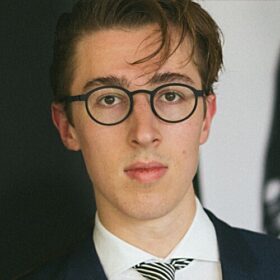
Thomas Demeester
Currently I am an assistant professor at the Internet Technology and Data Science Lab (IDLab), Ghent University - imec, Belgium. I'm co-leading the Text-to-Knowledge research cluster with prof. Chris Develder, where we work on natural language processing (NLP) in general, for applications in several domains (the media, biomedical applications, and economics and law). Our areas of focus in NLP are information extraction, conversational agents, and representation learning in general.
Given our expertise in neural sequence modeling, we recently started looking into the use of protein language models for drug design. Give it another year before we have something decent to show here ;). My other interests include energy-based models, combining knowledge and neural networks, and synthetic data generation.

José Oramas
José Oramas is an Assistant Professor at the Internet Data Lab (IDLab) a joint research lab between the University of Antwerp and IMEC. He received his PhD at the Center for Processing Speech and Images (ESAT-PSI) of KU Leuven in April 2015. Earlier he received his engineering degree from Escuela Superior Politecnica del Litoral in Ecuador. During his Ph.D. he conducted research on understanding how groups of elements from the image (objects, object-parts, image regions, trajectories, etc.) interact and how the relationships between them can be exploited to improve artificial visual perception problems. This fueled his interest towards investigating exploratory/explanatory models that can identify informative intermediate representations and use them as means to justify the predictions that they make.
Research Interests: Representation Learning, Interpretability and Explainability, Multiple Instance Learning, Machine Learning, Deep Learning and Computer Vision

Arne Gevaert
PhD Student at UGent
Machine Learning, Artificial Intelligence, AI safety.
Assisted in linked open data research at IDLab between March and December 2017. Helped develop an intrusion detection system using deep learning on system log data, between July and September 2018 and Robovision.

Jefrey Lijffijt
Jefrey Lijffijt is professor Data Science aan de Universiteit Gent - IDLab en leidt samen met Tijl De Bie de onderzoeksgroep AI & Data Analytics. De onderzoeksgroep AI & Data Analytics ontwerpt, implementeert en analyseert algoritmen en systemen om kennis en inzichten uit data te halen. Vrijwel al onze tools en artikelen zijn open source en open access beschikbaar. Jefrey Lijffijt is voorzitter van de AI-werkgroep aan de Faculteit Ingenieurswetenschappen en Architectuur en lid van de AI-kerngroep aan de Universiteit Gent. Hij draagt actief bij aan het onderwijs over (Gen)AI aan de Universiteit Gent en voorheen aan VAIA.
Zijn expertise omvat: artificiële intelligentie, machine learning, kennisontdekking, datavisualisatie, datamining, data-exploratie, visuele analyse, computationele complexiteitsanalyse, algoritmeontwerp, informatietheorie, statistische hypothesetoetsing, interactiviteit en tools en toepassingen. Voor een overzicht van recent onderzoek, zie https://aida.ugent.be/

Peter Karsmakers
Dr. Peter Karsmakers behaalde het M.Sc. diploma in artificiële intelligentie in 2004 en het PhD diploma aan het departement Electrical Engineering, KU Leuven, in 2010. Van 2010 tot 2013 was hij postdoctoraal onderzoeker in het MOBILAB-onderzoeksteam van Thomas More. Van 2013 tot 2018 werkte hij als postdoctoraal onderzoeker aan de KU Leuven waar hij het ADVISE onderzoeksteam mee oprichtte. Momenteel is hij een Associate Professor binnen het departement Computerwetenschappen in de afdeling DTAI aan de KU Leuven en is hij lid van het Leuven.AI instituut. Sinds 2022 is hij PI van Flanders Make@KU Leuven. Zijn onderzoeksinteresses omvatten het ontwerpen van machine learning algorithm die rekening houden met toepassingsspecifieke beperkingen. Deze kunnen bijvoorbeeld betrekking hebben op het computerplatform waarop het machine learning algorithm zal worden ingezet, aan de behoefte van fysieke consistentie tussen modelvariabelen, aan het gebrek aan data annotatie of aan andere toepassingsgerelateerde specificaties. Hij werkte aan diverse projecten, meestal in samenwerking met industriële partners, waarbij zowel mensen als machines worden bewaakt met behulp van sensoren zoals microfoons, versnellingsmeters en radars.

Mathias Verbeke
Mathias Verbeke is als professor Artificiële Intelligentie verbonden aan de Faculteit Industriële Ingenieurswetenschappen van KU Leuven. Op de campus in Brugge maakt hij deel uit van de Mechatronics Group (M-Group), een interdisciplinaire onderzoeksgroep die expertise verzamelt op vlak van intelligente, betrouwbare en geconnecteerde mechatronische systemen. Hij focust er op de uitdagingen die gepaard gaan met de industriële toepassing van artificiële intelligentie. Mathias is verder ook verbonden aan Flanders Make, het strategisch onderzoekscentrum voor de maakindustrie, en Leuven.AI, het KU Leuven Instituut voor Artificiële Intelligentie.

Luc De Raedt
Luc De Raedt is full professor at the Department of Computer Science, KU Leuven, and director of Leuven.AI, the newly founded KU Leuven Institute for AI. He is a guestprofessor at Örebro University in the Wallenberg AI, Autonomous Systems and Software Program. He received his PhD in Computer Science from KU Leuven (1991), and was full professor (C4) and Chair of Machine Learning at the Albert-Ludwigs-University Freiburg, Germany (1999-2006). His research interests are in Artificial Intelligence, Machine Learning and Data Mining, as well as their applications. He is well known for his contributions in the areas of learning and reasoning, in particular, for his work on probabilistic and inductive programming.

Katrien Verbert
Katrien Verbert is professor at the Augment research group of KU Leuven. She obtained a doctoral degree in Computer Science in 2008 at KU Leuven, Belgium. She was a postdoctoral researcher of the Research Foundation – Flanders (FWO) at KU Leuven. She was an Assistant Professor at TU Eindhoven, the Netherlands (2013 –2014) and Vrije Universiteit Brussel, Belgium (2014 – 2015). Her research interests include visualization techniques, recommender systems, explainable AI, and visual analytics. She has been involved in several European and Flemish projects on these topics, including the EU ROLE, STELLAR, STELA, ABLE, LALA, PERSFO, Smart Tags and BigDataGrapes projects.

Toon Calders
Toon Calders is professor aan de informatica-afdeling van de Universiteit Antwerpen. Zijn onderzoek concentreert zich op datamining en machine learning.
Hij is redacteur van het tijdschrift Data Mining en was programmavoorzitter van een aantal datamining- en machine learning-conferenties, waaronder ECML / PKDD 2014 en Discovery Science 2016.
Toon Calders onderzocht als een van de eersten hoe algoritmische vooroordelen bij machine learning gemeten en voorkomen kunnen worden. Hij is ook een van de redacteurs van het boek ‘Discrimination and Privacy in the Information Society – Data Mining and Profiling in Large Databases‘, uitgegeven door Springer in 2013.
Momenteel leidt hij een groep van 6 onderzoekers die theoretische aspecten van eerlijkheid in machine learning bestuderen. Ze onderzoeken praktische use cases in samenwerking met de Vlaamse belastingdienst, openbare welzijnsorganisaties en een verzekeringsmaatschappij.

Tias Guns
Tias Guns is hoofddocent in de Declaratieve Talen en AI (DTAI) sectie van het Departement Computerwetenschappen. Zijn onderzoek richt zich op de integratie van machine learning technieken met technieken van constraint solving en combinatorische optimisatie.
Hij is secretaris van de associatie voor constraint programming en lid van het executive committee van de Europese machine learning conferentie. Hij ontving in 2021 een prestigieuze ERC grant voor het ontwikkelen van conversationele mensgerichte software voor combinatorische optimisatie.
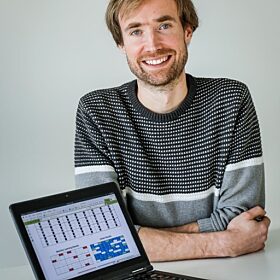
Willem Waegeman
Willem Waegeman is an associate professor at Ghent University, and a member of the research unit Knowledge-based Systems (KERMIT) of the Department of Data Analysis and Mathematical Modelling. His main interests are machine learning and bioinformatics. Specific interests include multi-target prediction problems, uncertainty quantification, sequence models and deep learning.
Willem Waegeman is an author of more than 100 papers of peer-reviewed journals and conferences, and his work has won several prizes. In recent years he has served on the program committees of leading conferences in his field (ICML, NIPS, ECML/PKDD, AAAI, AISTATS, IJCAI, etc.).
Since 2008 he is lecturing a machine learning course in Ghent. Since 2014 he is also lecturing several introductory math courses in the first bachelor (> 500 students per year). Willem Waegeman is currently supervising eight PhD-students.

Steven Latré
Prof. Steven Latré, is VP R&D AI and Algorithms and is leading the algorithmic research at imec, with a particular focus on machine learning. imec is the worldwide leading R&D hub for nano-electronics and digital technologies. He leads an interdisciplinary team of 1,000 researchers at the intersection of AI accelerators, advanced sensors and machine learning. This results in application domains such as compute and connectivity systems, life science technologies, automotive, greentech and smart industries. Next to this, he is also a part-time professor at the University of Antwerp.

Gerelateerde opleidingen

AI voor Beginners - ChatGPT en co slim en verantwoord inzetten in je dagelijkse werk
Opleiding - Antwerpen - Thomas More Hogeschool, Syntra AB
Claude AI Power User: automatiseer je workflows en boost je AI-productiviteit
Opleiding - Berchem - Syntra AB